

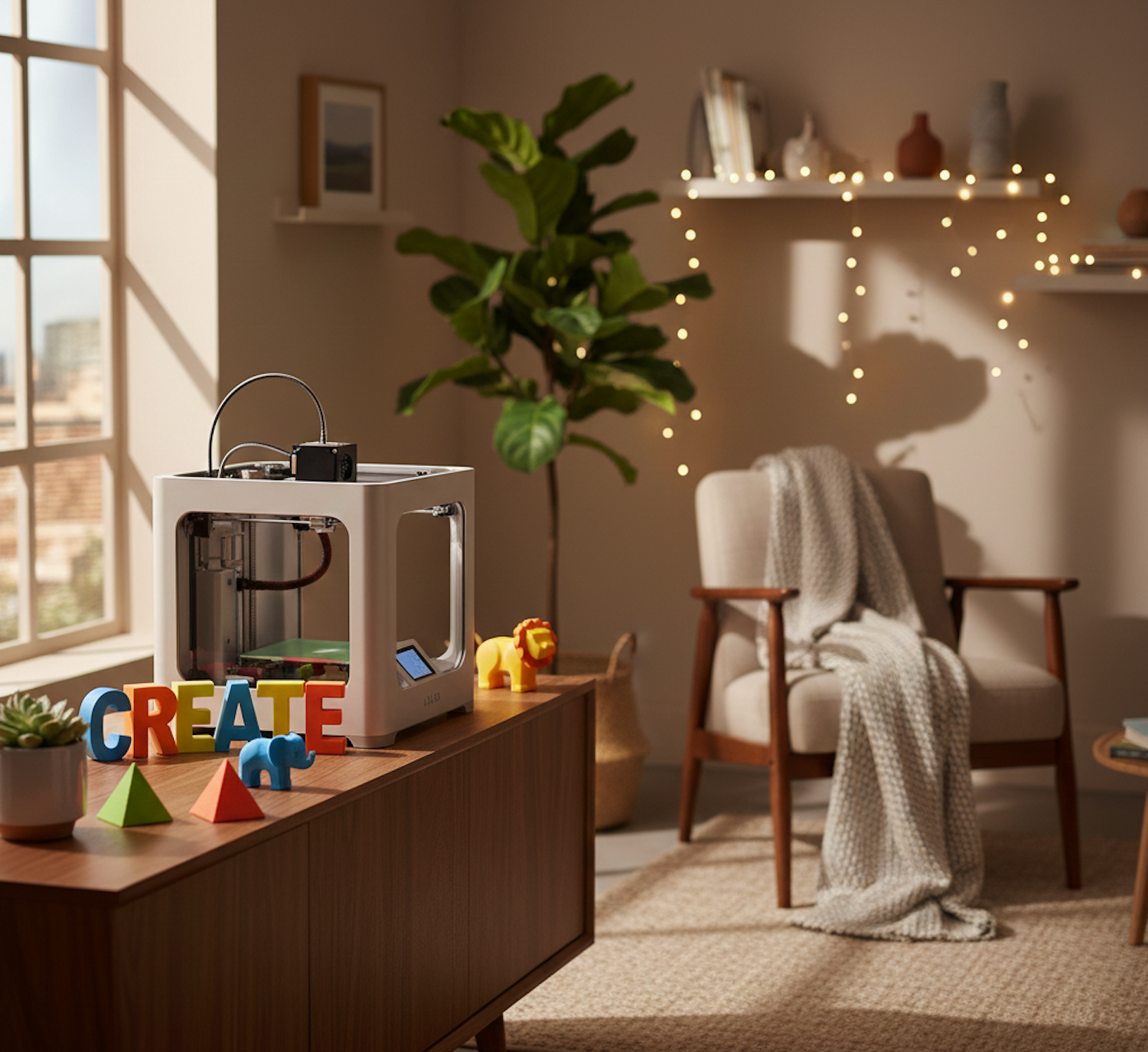
I’ve written extensively about 3D printing in schools. But here’s the truth: some of the most powerful learning happens at home, in those unstructured hours when children have freedom to explore, create, and follow their curiosity.
My son spent his summer discovering 3D printing instead of disappearing into games. That story isn’t just about one teenager – it’s about what happens when families have access to creative technology at home.
For modern parents raising children in the age of screens, 3D printing offers something remarkable: technology that creates rather than consumes, screens that lead to building rather than passive watching.
The Screen Time Dilemma
You know the pattern. The iPad. The games. The YouTube videos. Hour after hour that feels simultaneously unavoidable and concerning.
3D printing uses screens to escape screens. It harnesses digital engagement to create physical objects. It takes that magnetic pull of technology and redirects it toward making, designing, and problem-solving.
What Parents Can Make for Young Children
For parents of toddlers and preschoolers, 3D printing becomes a tool for creating exactly what your child needs, when they need it.
Simple toys for motor development and color learning represent the largest category of models for young children – easy to print, colorful, and genuinely engaging. Parents report mutual joy: children love playing with new toys, and parents love creating something personally rather than buying generic options from stores. Plus, you can personalize toys with embossed pictures, names, and custom additions.
Safety modifications for your home: Various 3D-printed safety upgrades improve children’s welfare while giving anxious parents relief from 24/7 vigilance – furniture corner protectors, outlet covers, drawer locks, cabinet latches all customized to your specific furniture and needs.
Practical parenting tools: From stroller clips and magnetic phone holders to foot measurement tools for shoe shopping, toothbrush organizers, and baby bouncer upgrades – 3D printing creates solutions for those small daily frustrations that come with raising young children.
Educational manipulatives specific to what they’re learning: Unlike store-bought educational toys, you can print exactly what matches your child’s current developmental stage – alphabet letters they can trace, counting objects themed to their current interests, shape sorters customized to the shapes they’re learning.
The beauty of this: it’s not just functional. Many designs are beautiful and genuinely delightful. Your home doesn’t have to fill with cheap plastic toys when you can create well-designed, personalized objects your child actually uses.
From “I Want That” to “Let’s Make It”
Here’s where 3D printing transforms family dynamics in unexpected ways.
Traditional toy buying creates a consumption pattern: child sees something, wants it, parent buys it (or doesn’t), cycle repeats. The child is a consumer, passive in the creation of their play objects.
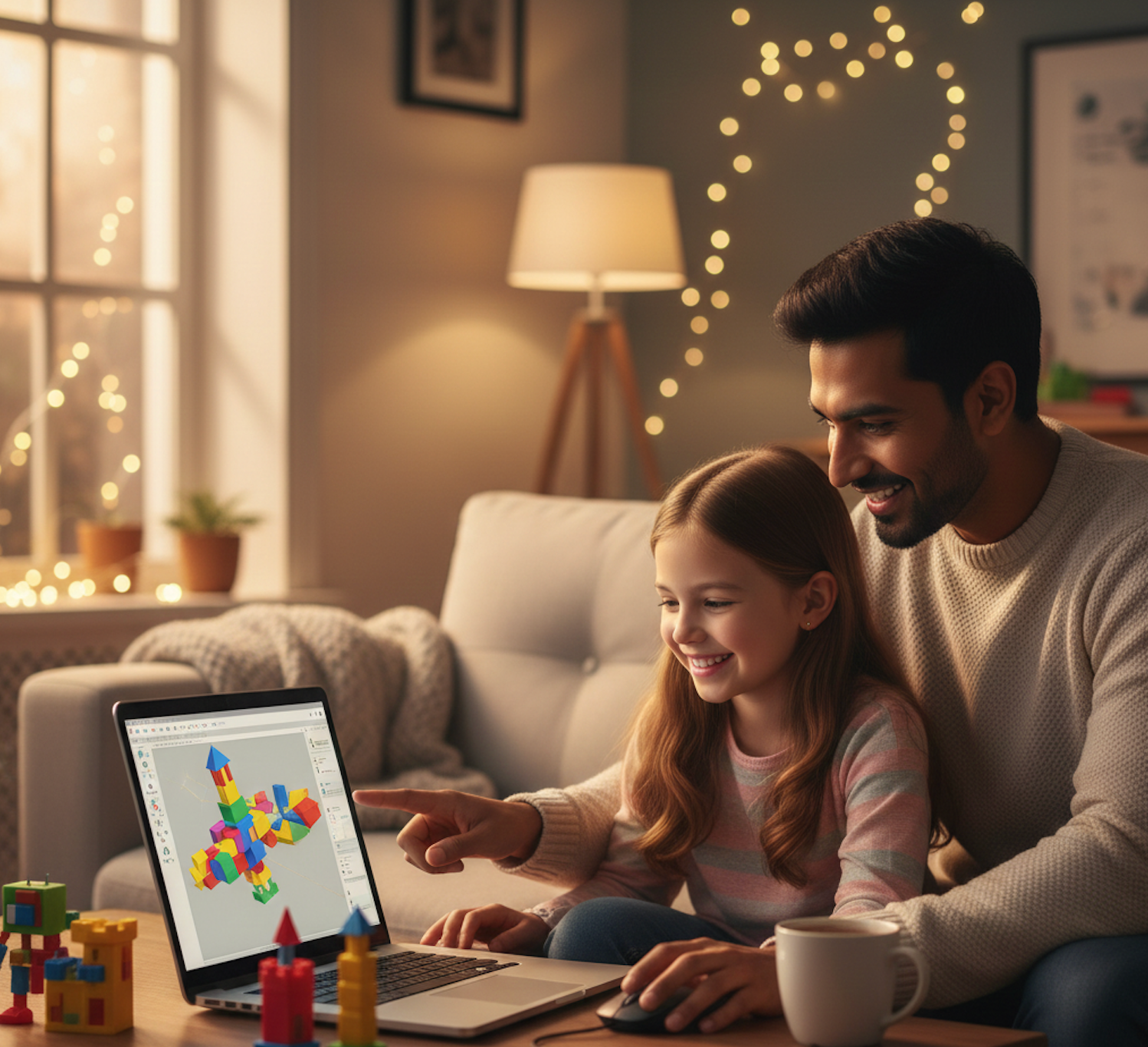
3D printing shifts this entirely. Parents describe turning “I want this toy” into “Let’s make it together!” – sharing precious moments designing, creating, and celebrating each new creation.
The design process becomes family time. Parent and child sit together browsing models, choosing colors, making design decisions. Even with very young children who can’t design themselves, the conversation matters: “What should we make next?” “Which color do you like?” “Should it be big or small?”
The waiting becomes anticipation. Unlike instant purchase gratification, printing takes time. But watching the printer work becomes its own entertainment. Parents report children haven’t touched tablets since getting their 3D printer, captivated by watching their design materialize layer by layer.
The result becomes precious. When children see their first print complete, their faces light up differently than opening purchased toys. This is something they helped create.They watched it emerge. It’s theirs in a deeper way.
Educational Benefits for Home Learning
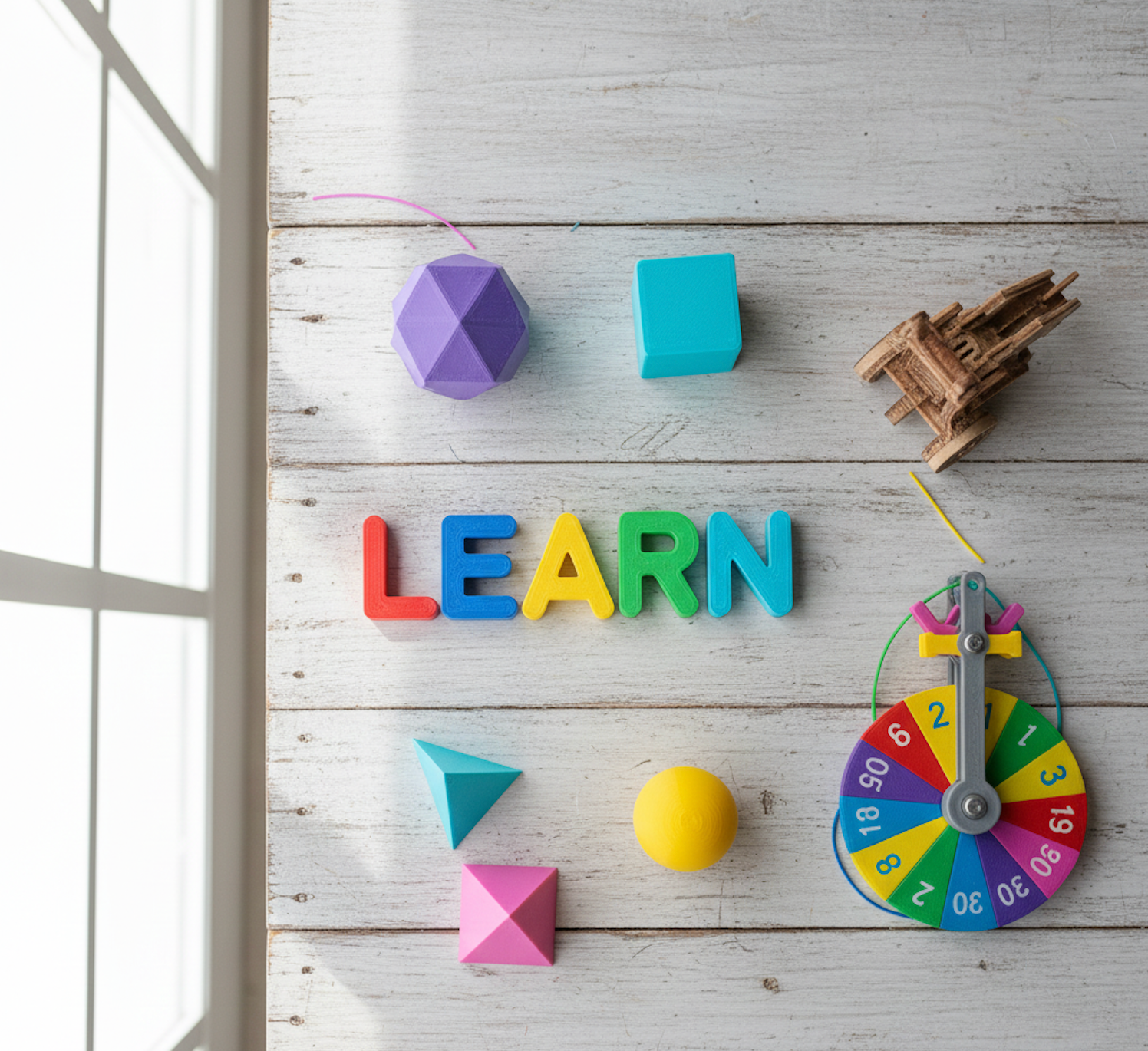
Beyond the joy of making, 3D printing at home delivers genuine educational value across subjects:
Mathematics becomes playful: Rotating math spinners for number bonds and times tables work better when children own them, printed in colors they love. Learning addition, subtraction, multiplication, and division is more fun – and memorable – when there’s a toy involved.
Science concepts materialize: Physics principles through catapults and trebuchets. Engineering fundamentals through vehicles with working wheels. Biology through anatomical models children can take apart and reassemble.
Art and design thinking: Children draw their own toys – monsters, Minecraft characters, Pokémon, favorite cartoon figures – then watch them become real. This translation from imagination to design to physical object teaches spatial reasoning and creative problem-solving.
Geography and history: Printing landmarks, maps with raised topography, historical artifacts makes abstract concepts concrete and memorable.
Problem-solving skills: When something doesn’t print correctly, figuring out why and how to fix it teaches resilience and systematic thinking. This is STEM learning disguised as troubleshooting.
Age-Appropriate Entry Points
Parents often wonder: when can my child start 3D printing?
Ages 6-7 (Early Elementary): Children interact with printers under adult supervision. Focus on pre-designed models – articulated toys, animal models, simple crafts. They can help load filament or start prints but aren’t designing yet. The magic of watching creation happen captivates them.
Ages 8-10 (Upper Elementary): Introduction to simple design tools. TinkerCad offers step-by-step lessons guiding children through moving, placing, and editing objects in 3D space. They can browse Thingiverse, explore what’s possible, and begin modifying existing designs.
Ages 11-13 (Middle School): More complex projects. They can design original objects, understand slicing software, troubleshoot problems, and take ownership of entire projects from concept to finished print.
Ages 14+ (High School): Advanced design, business applications, functional objects solving real problems. This is when 3D printing can become genuine entrepreneurship or serious hobby pursuit.
But here’s the truth: readiness varies by child. The key is adult guidance and age-appropriate expectations, not rigid age cutoffs.
The Environmental Benefit
Modern parents increasingly care about sustainability. We worry about plastic waste, consumption patterns, and what values we’re teaching through our purchasing habits.
3D printing at home offers unexpected environmental advantages:
Biodegradable materials: PLA filament comes from plant sources like corn or sugarcane, breaking down faster than traditional plastics. Some families use wood-PLA or bamboo-PLA filaments from natural fibers.
Print only what you need: Unlike mass manufacturing, you create exactly one toy, one tool, one object – no overproduction, no excess inventory sitting in warehouses.
Repair rather than replace: That broken toy part? Print a replacement. That missing game piece? Create a new one. This teaches children repair culture over disposable culture.
Reduced transportation emissions: No shipping from overseas factories. You manufacture at home, reducing your family’s carbon footprint.
Waste reduction: Families following the 6R model (Reject, Redesign, Reduce, Reuse, Recycle, Recover) for sustainable material use find 3D printing aligns perfectly with environmental values they want to teach children.
The Safety Reality
Let’s be honest about safety concerns, because responsible 3D printing with children requires awareness:
Choking hazards: Young children aren’t aware of dangers from small 3D-printed parts. Never leave children unattended with printed objects. This is by far the most important rule – you never know what’s on their minds.
Print quality matters: Double-check prints for errors like stringing before offering toys to children. Clean surfaces thoroughly to prevent ingesting plastic microparticles.
Food-safe considerations: 3D-printed parts aren’t meant to be put in mouths repeatedly. If your child tends to taste everything, consider food-safe coating that makes surfaces tough, smooth, and safer, while helping round edges to prevent other harm.
Printer safety: Never let children access hot printer parts or moving mechanisms during operation. Many kid-friendly printers feature enclosed designs that isolate fumes and protect children from touching dangerous components.
Material safety: Use non-toxic filaments. PLA is generally considered safe, but always verify materials are appropriate for children.
Practical Starting Points for Families
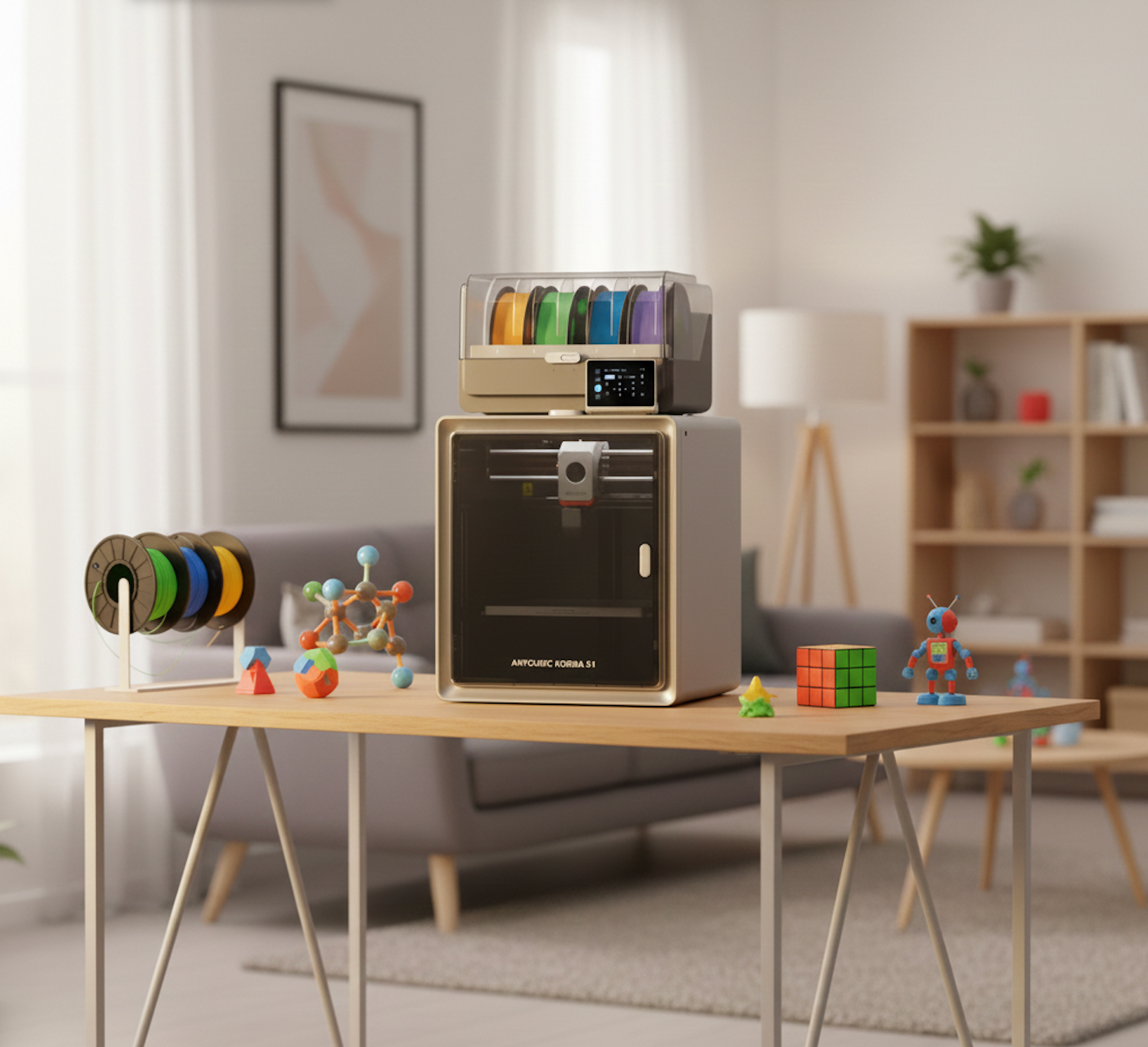
If you’re considering bringing 3D printing into your home:
Start with reliable, beginner-friendly printers: Kid-friendly machines work right out of the box, sacrifice some adjustability for ease of use, and some require no more complexity than using a microwave.
Use curated design libraries: Many printers come with parent-approved model libraries featuring safe, appropriate designs. You don’t need to hunt through the entire internet – start with vetted, child-friendly options.
Join the community: Families share creations and connect online, creating supportive spaces for parents learning this technology together.
Begin with pre-made designs: You don’t need design skills immediately. Thousands of free models exist on Thingiverse, MyMiniFactory, and even NASA’s collection. Start printing things others designed, then progress to modifications, then original designs.
Make it a family project: Parents and kids working together learn new skills simultaneously. This teamwork builds stronger family bonds while teaching digital literacy, engineering concepts, and creative problem-solving.
What This Means for Your Family
Here’s what I’ve observed watching families integrate 3D printing at home:
Screen time becomes creation time: Children spend hours designing, adjusting, perfecting – all on screens, yes, but screens that lead to tangible results.
“I’m bored” disappears: When children can imagine and make, boredom transforms into project planning.
Family bonding strengthens: Shared creating beats shared consuming. Working on designs together, celebrating successful prints, troubleshooting problems – these become family memories.
Confidence grows: Children who make things believe they can solve problems. That’s a mindset that extends far beyond 3D printing.
Learning becomes self-directed: When children want to create something specific, they’ll teach themselves whatever skills they need to make it happen.
The Real Transformation
3D printing at home isn’t about replacing traditional toys or eliminating all screens. It’s about giving families an additional tool – one that happens to bridge digital and physical worlds beautifully.
It’s about parents having answer when children say “I want that toy” beyond “yes” or “no” – an answer that says “we could make that together.”
It’s about filling your home with objects that tell stories – “I designed this,” “we made this together,” “I figured out how to fix the problem and printed this solution.”
It’s about teaching children that technology can be a tool for creation, not just consumption. That screens can lead to making, not just watching. That digital skills can produce real, physical results.
And perhaps most importantly, it’s about giving parents a genuine alternative to passive screen time – one that engages children just as powerfully but leaves them with skills, confidence, and tangible creations rather than just consumed content.
That’s not just educational technology. That’s family transformation.
Leave a Reply