


Happy Saturday my wonderful children!
I found myself examining a print too closely today and, noticing the tell-tale signs of an object being 3D printed, wondering if I like this better than a store-bought, “perfect” item. Let’s dive into it.
(Just a PSA though – I’m mostly gonna be talking about FDM technology here, so most of this doesn’t really apply to other types of 3D printing.)
3D printing has spent years shaking off the idea that it produces “rough,” “imperfect,” or “unfinished” objects. Sure, a printed piece doesn’t look like a factory-molded toy fresh from an injection mold, and that’s exactly the point. The very things some people call flaws are what make 3D printed items interesting, unique, and worth celebrating.
Here are the key characteristics that make 3D printed objects stand out in the best way.
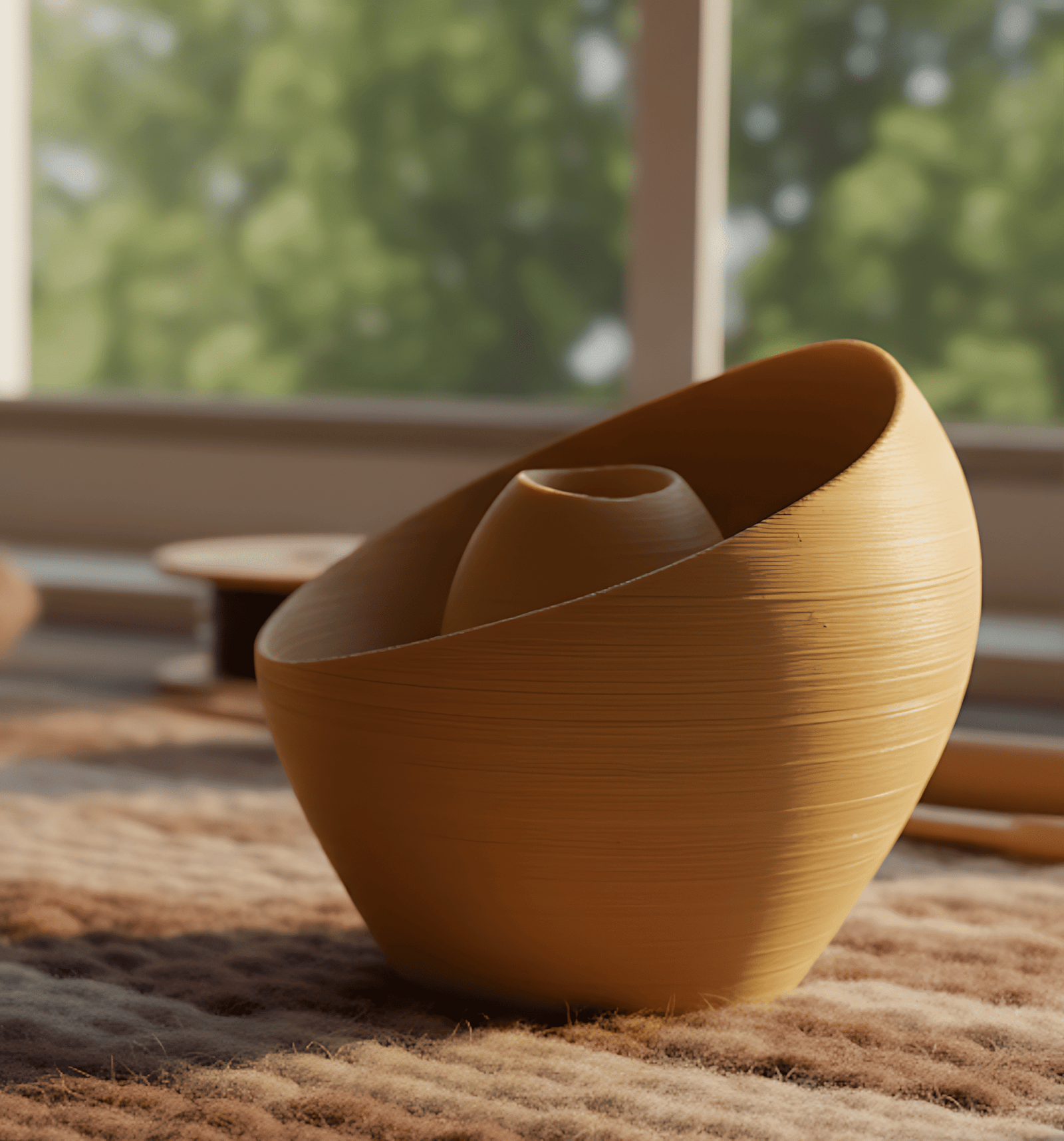
1. Layer Lines: A Visible Record of Creation
Every FDM 3D printed object is built line by line and layer by layer. Those faint lines you can see or feel aren’t defects. They’re a topographical map of how the object came to life.
Layer lines show the process.
Layer lines show the craftsmanship.
Layer lines make each print unmistakably real.
Where mass-produced plastic is designed to hide its origins, a 3D print wears its creation proudly.
2. Slight Variations: Built-In Uniqueness
No two prints are ever 100 percent identical. Tiny shifts in temperature, humidity, filament behavior, and machine calibration add subtle variation. These differences don’t reduce quality—they create individuality.
Your item isn’t “one of a million.” It’s one of one.
3. Tactile Texture: A Handmade Feel
The texture of a FDM 3D printed surface gives it a tactile quality that factory plastics just don’t offer. Instead of the overly smooth, anonymous shell of a molded part, you get an object whose feel matches its handmade origin.
It doesn’t feel mass-produced because it isn’t.
4. Material Personality
PLA, PETG, ABS, flexibles, wood-fill, metal-fill—they all bring their own visual and tactile traits. Some shine. Some have matte subtlety. Some smell faintly of warm sugar while printing. The material itself contributes to the final look and “character” of the item in a way injection molding can’t replicate.
5. Customization Built Into the Object
Every 3D printed piece can be resized, personalized, or altered before printing. That means each item carries the intentional choices of its maker:
A slightly thicker wall here, a special color there, a reinforced hinge, a custom engraving.
You can’t get “mass customization” from factory plastic.
3D prints, on the other hand, are born from it.
6. The Creation Experience: Imagination Turned Into Reality
This is where 3D printing pulls ahead of traditional manufacturing entirely. Owning a 3D printer isn’t just about producing objects; it’s about participating in the act of creation.
When you have a printer at home, you get to become the designer, engineer, artist, and problem-solver in one. You’re free to build objects that don’t exist anywhere else. You can sketch out an idea in your head during breakfast and be holding a physical version of it by evening.
This creative loop becomes addicting in the best way:
You notice problems around your home and start thinking, “I could print something to fix that.”
You see a cool object online and imagine how you could adapt it to your style.
You start with simple models and, over time, end up designing your own tools, decorations, organizers, toys, props, parts, and gifts.
Every print becomes a reflection of your thinking, your preferences, your improvements, and your experiments. Factory plastics don’t offer that. They come pre-decided. Pre-shaped. Pre-finished.
A 3D printed item, by contrast, is a physical form of your creativity.
And when something has your fingerprints on its design journey, it naturally gains character.
Final Thoughts
3D printed items aren’t trying to be factory-perfect. Their beauty lies in their individuality, their visible craftsmanship, and the personal choices baked into every layer. The “flaws” aren’t flaws at all; they’re personality. They’re the signature of the maker, the machine, and the moment the object was created.
In a world full of identical mass-produced plastics, 3D printed pieces stand out as objects with soul.
That’s a wrap! Imperfection is cool, my children. Go print yourself something amazing, and enjoy every excruciating part of the process. Go!
… I mean it. C’mon, chop chop!
Leave a Reply