

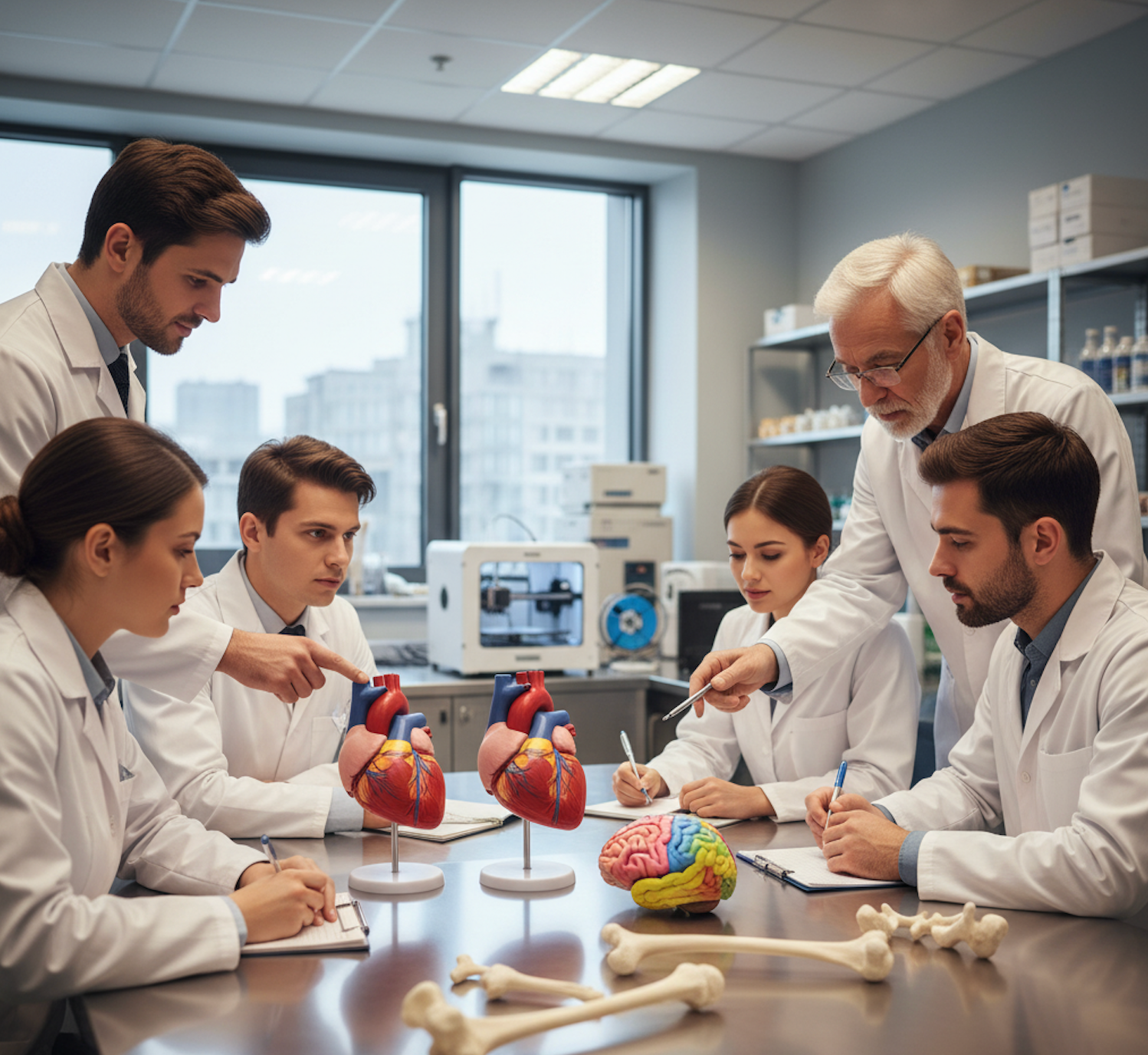
There’s a moment in every medical student’s education that defines their journey: the first time they work with human anatomy.
For centuries, this meant cadavers. Real human bodies donated to science. It was considered the gold standard – and in many ways, it still is. But it came with significant challenges: ethical concerns, limited availability, preservation difficulties, and the reality that not every medical school could access enough cadavers for their students.
Then came 3D printing. And medical education changed forever.
The Problem Medical Education Always Faced
Traditional anatomy education faced obstacles that seemed insurmountable:
Limited resources: Cadavers are scarce. One body serves many students, but not every student gets adequate hands-on time.
Ethical complexities: Cultural and religious considerations make cadaver use problematic in many regions.
Lack of variation: Students might see one or two examples of an organ, but human anatomy varies tremendously. Pathologies, anomalies, individual differences – cadavers can’t show students the full range of what they’ll encounter in practice.
Living creatures in training: Before 3D printing, some medical procedures were practiced on animals. The ethical implications troubled many students and educators.
Fragility and deterioration: Once a cadaver is dissected, that’s it. The resource is consumed. Delicate structures can be damaged during one student’s examination, making them unavailable for others.
Studies show that 3D printing in anatomy education provides tactile feedback, three-dimensional visualization, and anatomically precise details that assist in memorizing anatomical structures. But the impact goes far beyond simple memorization.
Medical Students: Learning Without Living Patients at Risk
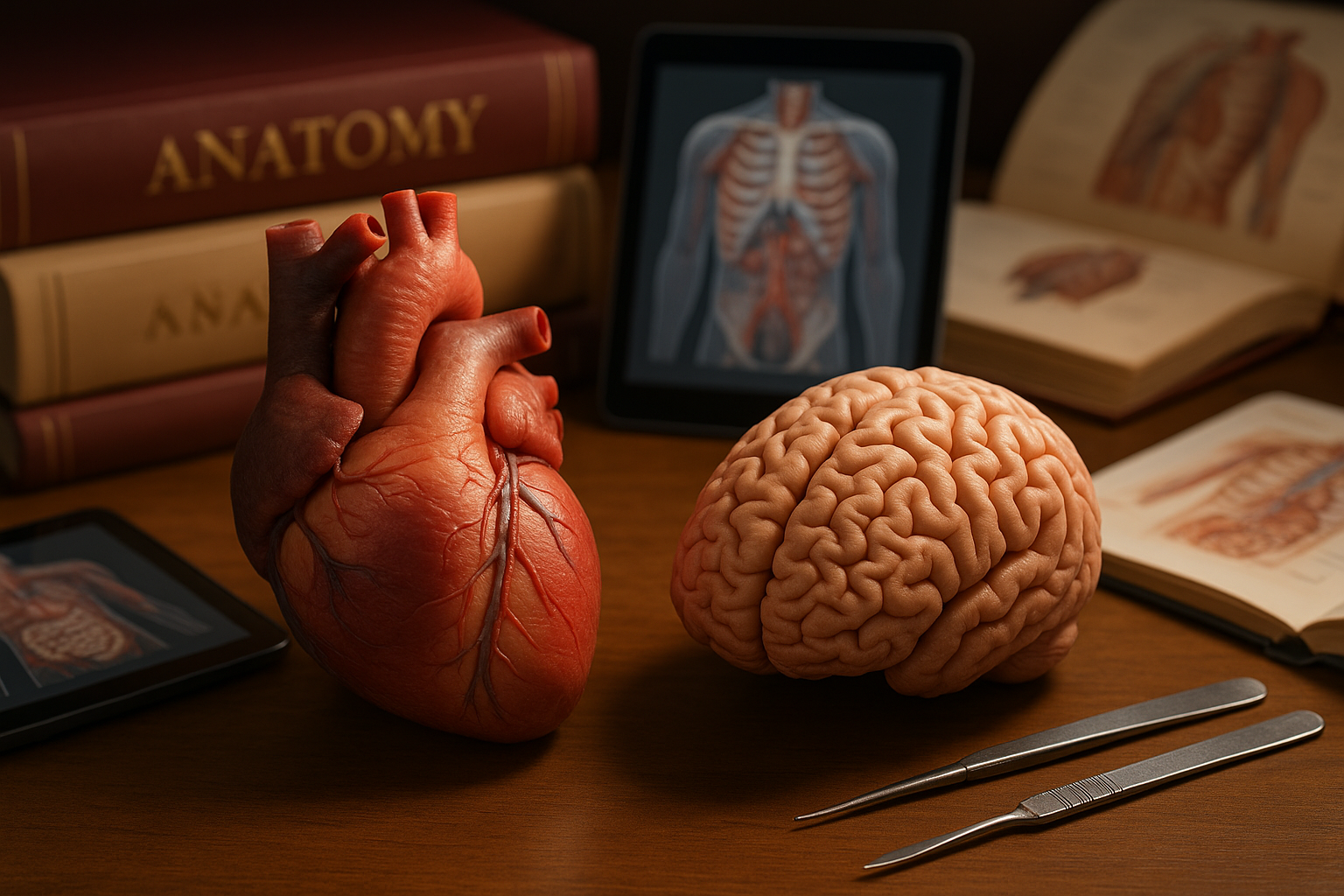
Medical students using 3D printed models in anatomy education showed significantly better performance in post-training tests compared to conventional teaching methods. This isn’t just about test scores – it’s about genuine understanding that translates to better patient care.
Medical students included in studies were randomized into 2D and 3D teaching groups, with the 3D group performing better statistically in post-tests, with overall feedback from students and teaching faculty being very positive.
What makes this revolutionary: students can practice repeatedly on identical models without risk. A surgeon-in-training can attempt a complex procedure five times, ten times, until they master it – all before ever touching a real patient.
3D printing stimulates student engagement, resulting in better academic performance, with studies indicating that the novelty of the technology increases student interest, leading to more effective learning.
The anatomy they’re learning isn’t generic. With 3D printing, educators can use their own banks of datasets or open datasets to potentially cover a larger range of different anatomy compared to individual cadavers. Students can examine rare pathologies, unusual anatomical variations, and complex abnormalities they might never encounter in a cadaver lab.
Dental Education: From Theory to Perfect Technique
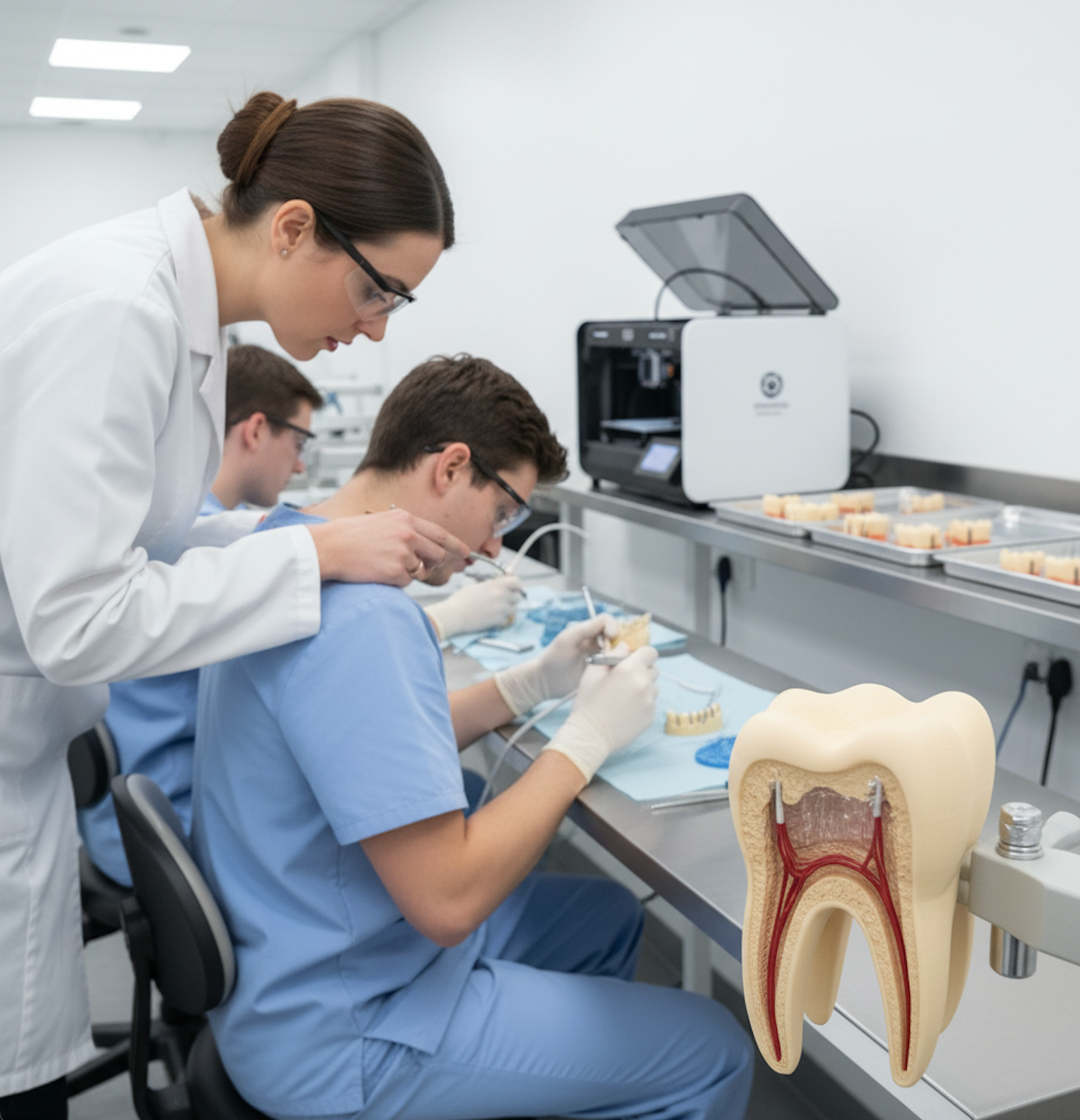
Dentistry faces its own educational challenges. How do you train students in delicate procedures without practicing on real patients who might experience discomfort, pain, or complications?
3D-printed teeth provide an attractive alternative to extracted teeth and standard dental models, as they provide educational equality and realistic simulation of natural teeth.
Over 80% of dental students agreed with incorporating 3D printed teeth and virtual simulation into their routine training courses, with studies showing enhanced teaching efficiency and boosting students’ confidence.
Think about what this means practically:
A dental student preparing for endodontic (root canal) treatment can practice on 3D printed teeth that replicate difficult root canal morphologies. Clear resin models allow visualization during preparation and obturation of canals, refining the clinical practice of trainees.
Postgraduate periodontics and implantology students practicing surgical techniques on patient-specific 3D-printed models reported significant improvements in procedural comprehension and hands-on skill acquisition.
The traditional approach had students practicing directly on patients during their training – with all the discomfort and risk that entailed. Now they arrive at their first real patient procedure with hours of practice behind them.
Surgery: Rehearsing Before the Operating Room
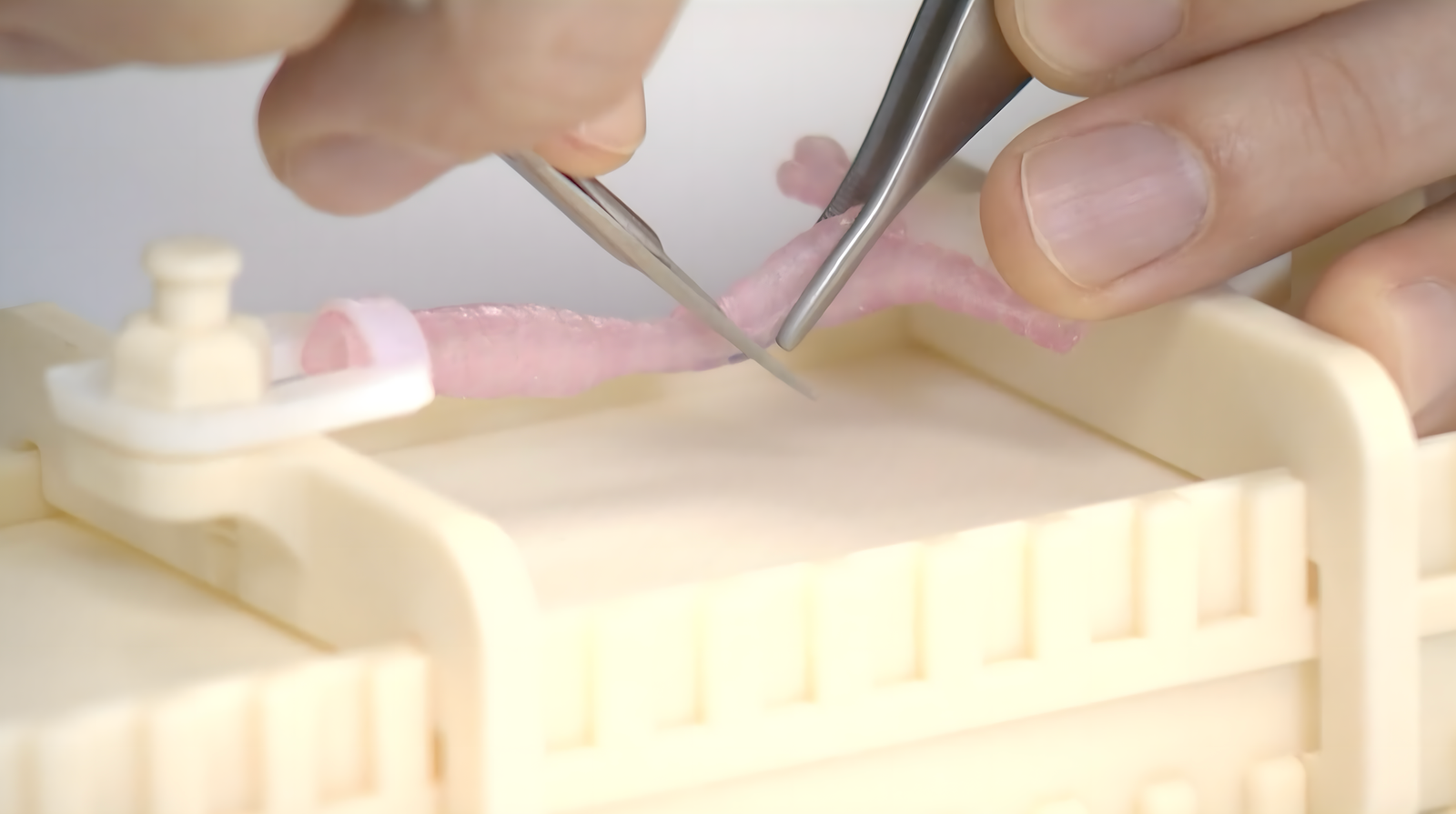
Perhaps nowhere is 3D printing more transformative than in surgical training.
Given simulators provide safe, realistic learning environments for repeated practice, they are increasingly used in clinical skills training for undergraduates in procedures like suturing and lumbar puncture.
Surgeons can now practice on models created from actual patient scans. Before a complex procedure, they can print the specific anatomy they’ll encounter and rehearse the surgery multiple times.
3D-printed anatomical models offer a concrete depiction that patients can feel and inspect, making them excellent for patient education and communication, while pre-surgical planning with these models can significantly reduce operative time and complexities, thereby lowering overall procedure costs.
This isn’t hypothetical. Cardiac surgeons practice on 3D printed hearts showing specific abnormalities. Neurosurgeons rehearse on models of individual patients’ brain anatomy. Orthopedic surgeons plan complex reconstructions using printed bone models.
The patient benefits twice: their surgeon is better trained generally, and specifically prepared for their unique case.
The End of Animal Testing in Medical Training
Here’s something that doesn’t get discussed enough: biomechanically accurate 3D models offer realistic representation of targeted pathology, giving medical students and researchers hands-on learning experience without the limitations of animals and cadavers.
Medical students no longer need to practice certain procedures on living animals. The ethical relief this provides – for both students and educators – cannot be overstated.
The models can be designed to replicate specific conditions, offer tactile feedback similar to real tissue, and be used repeatedly without harm.
What Doctors Gain
Beyond the educational benefits, 3D printing gives practicing physicians powerful tools:
Surgical planning: Print a model of a patient’s specific anatomy before surgery. Study it. Plan the approach. Anticipate complications.
Patient communication: Show patients exactly what you’re seeing. A 3D model of their condition is far more understandable than an MRI scan.
Rare case preparation: Encountering an unusual anatomy or pathology? Print it. Study it. Consult with colleagues using a physical model everyone can examine.
Prosthetics and implants: Create patient-specific medical devices that fit perfectly because they’re designed from that patient’s exact measurements.
What Patients Gain
Ultimately, all of this benefits patients:
Better-trained medical professionals: Your surgeon has practiced extensively before ever touching a patient.
Personalized treatment planning: Your specific anatomy is studied and understood before your procedure begins.
Reduced surgical time: Surgeons who have rehearsed on your specific anatomy work more efficiently.
Improved outcomes: Better preparation means fewer complications and better results.
Better understanding: You can see and touch a model of your own condition, making informed consent truly informed.
What This Means for Georgian Medical Education
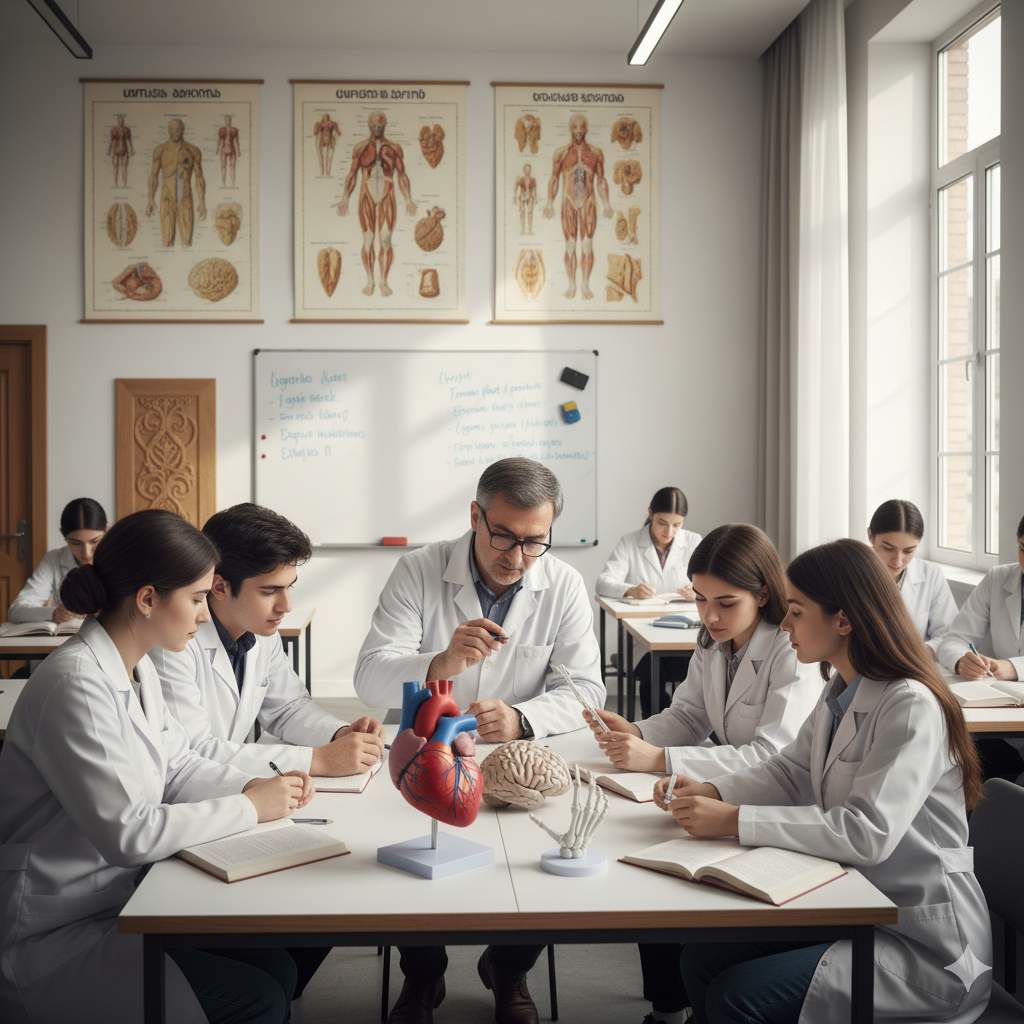
I was a medical student in Georgia in the 2000s. I remember the challenges vividly.
Even having access to a proper anatomical atlas was difficult. Anatomy lectures often happened without any visualization – just words, descriptions, endless names to memorize. Muscles, bones, nerves, blood vessels – hundreds of structures we were expected to remember and understand from verbal descriptions and occasional textbook diagrams.
It was unimaginably hard. You’d sit there trying to visualize complex three-dimensional structures from two-dimensional drawings or, worse, from pure description. The levator scapulae, the brachial plexus, the intricate pathways of cranial nerves – all of it existing only in our struggling imaginations.
I can’t help but think: what would 3D printing have meant for us then? To hold a printed model of the brachial plexus, to see its branches and relationships from every angle, to understand spatially what we were desperately trying to memorize from words?
It would have been transformative.
And now, hoping Georgian medical schools begin to integrate this technology, I feel both excitement for current students and a bit of envy for what they have access to.
For Georgian medical education specifically, 3D printing addresses challenges that have persisted for decades:
Limited cadaver access has always been an issue. Not every medical school in Georgia has adequate anatomy resources. 3D printing democratizes this – a school in Tbilisi and a school in a regional city can have access to the same quality of anatomical models.
Language barriers decrease. When you can hold and examine a physical model, the language of instruction matters less. The anatomy speaks for itself.
Cost barriers lower. While initial investment in 3D printing technology exists, the long-term cost of producing models is far less than traditional anatomy education resources. Georgian medical schools can build their own libraries of anatomical models over time.
Cultural considerations are respected. For students or families with religious or cultural concerns about cadaver use, 3D models provide an alternative pathway to comprehensive anatomy education.
I can imagine what an amazing thing it is to be a medical student now, in this time of technology. The information I struggled to memorize from descriptions, current students can hold in their hands. The spatial relationships I tried to understand from flat diagrams, they can examine from every angle.
This isn’t just about easier learning – though it is easier. It’s about deeper understanding, better retention, and ultimately, better-prepared physicians caring for Georgian patients.
The Accessibility Revolution
Here’s what makes this transformation even more significant: affordable 3D printing can address challenges of traditional anatomy education.
Medical schools in regions that couldn’t access adequate cadavers can now provide comprehensive anatomy education. The 3D printing of multiple copies for teaching anatomy in large groups makes the models more cost-effective.
Dental students can have their own set of practice teeth instead of sharing limited resources. Surgical residents can practice specific procedures as many times as needed.
The democratization of medical education benefits everyone – because it means better-trained healthcare providers worldwide.
Looking Forward
More medical schools are expected to see the value in 3D printing for anatomy education and would increasingly take up its use, with the technology playing an increasingly pivotal role in shaping the future of medical education and surgical practice.
We’re at the beginning of this transformation. As 3D printing technology improves – creating more realistic tissue properties, more accurate anatomical details, more sophisticated pathology models – medical education will continue evolving.
The students entering medical and dental schools today will graduate as practitioners who learned on technology that gives them unprecedented preparation. Their patients will be the beneficiaries of that preparation.
And unlike previous generations of medical students, they achieved that expertise without practicing on living creatures, without limited access to anatomy resources, and with the ability to rehearse complex procedures before ever encountering them in real patients.
That’s not just technological progress. That’s a fundamental transformation in how we prepare people to save lives.
Leave a Reply