

- The Future That Looks Like Home
- The Digital Imperative: Preserving Heritage in the Third Dimension
- Why Culture + 3D Printing Is a Perfect Match
- Inspiration Everywhere: Georgia’s Design DNA
- Turning Inspiration into Objects
- Why This Matters for Designers and Entrepreneurs
- The Future of Cultural Creation
- Join Georgia’s Makers Movement
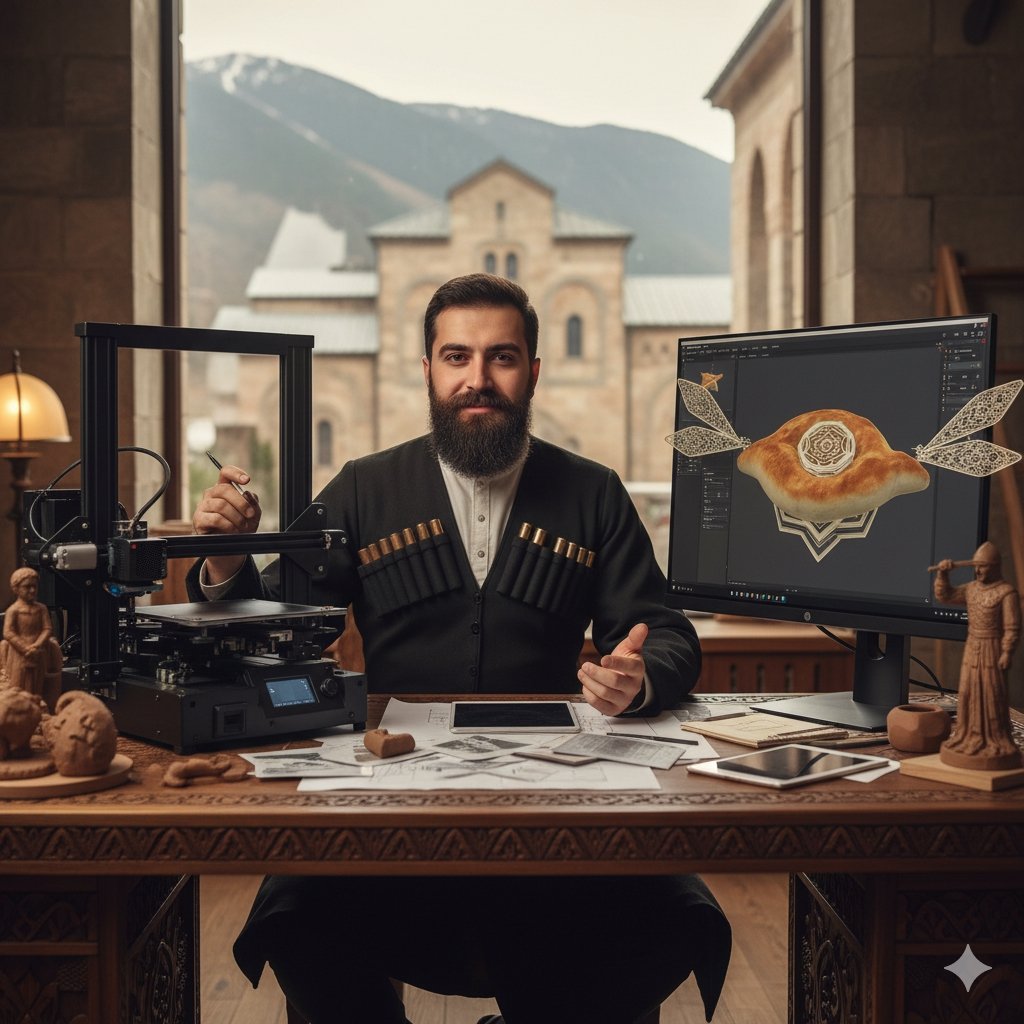
The Future That Looks Like Home
Imagine holding a piece of Georgian history—an object shaped by the same forms that inspired Minankari enamelwork or the curves of a Qvevri wine vessel—but brought to life by a modern 3D printer.
That moment—when centuries-old craftsmanship meets digital fabrication—is where the true creative power of 3D printing in Georgia begins. At its core, Georgia’s legacy is not just a collection of preserved artifacts; it represents 8,000 years of unique intellectual property (IP) embedded in architecture, symbols, and ancient functional design. This cultural wealth is the indispensable ingredient for success in the global, customized manufacturing landscape. Unlike generic goods, products based on ancient Georgian forms offer immediate narrative depth and aesthetic distinction, making them highly desirable in niche global markets.
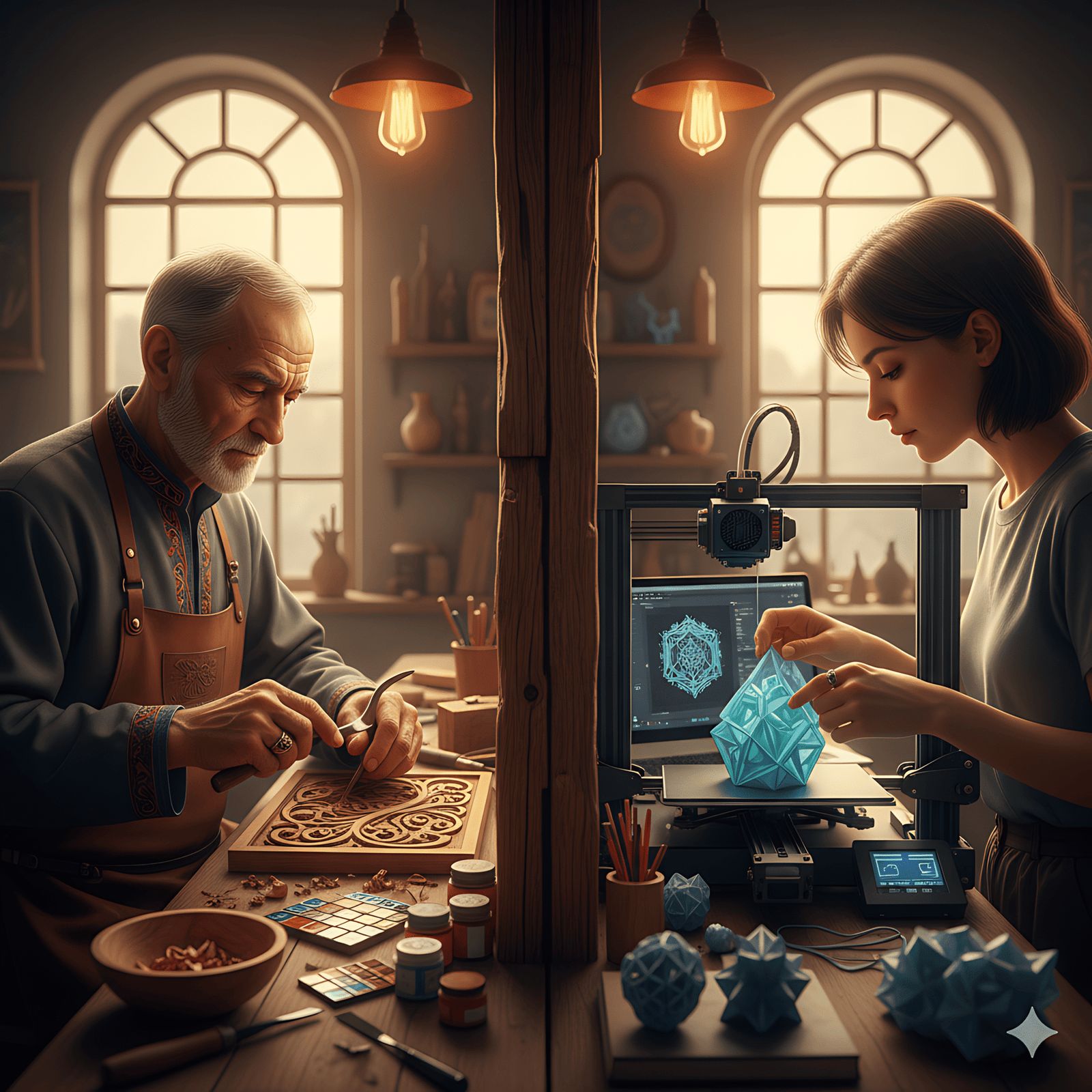
At 3D Vinci, we believe that technology should not erase heritage; it should extend it. 3D printing allows designers, artisans, and entrepreneurs to create culturally meaningful products that merge art, identity, and innovation, empowering them to turn this vast cultural IP into tangible, exportable hardware.
The Digital Imperative: Preserving Heritage in the Third Dimension
The essential first step in leveraging this legacy is digitization. By utilizing 3D scanning and sophisticated modeling, Georgia transforms its priceless heritage—from the ornate carvings of Tbilisi to the complexities of ancient goldsmithing—from a fragile archive into an inexhaustible, iterative digital resource.
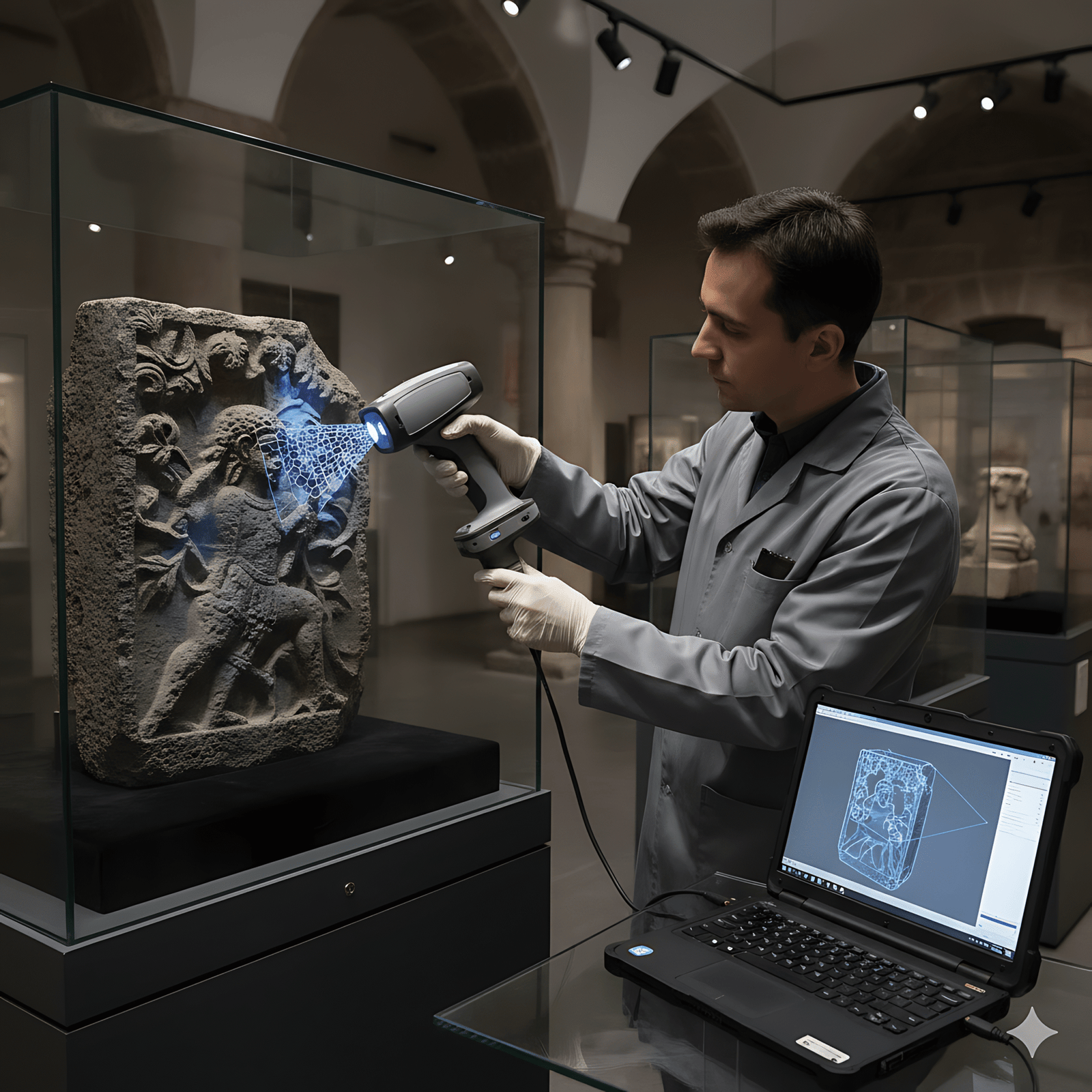
This process involves high-resolution techniques like laser scanning historical sites such as the Svetitskhoveli Cathedral, or micro-CT scanning museum artifacts, creating ‘digital twins’ that can be endlessly studied and adapted without risk to the original piece. This digital imperative prevents cultural loss while simultaneously unlocking every motif and structure for modern reinterpretation. Digital archives ensure that even the most complex, skill-demanding historical forms can be accessed, studied, and functionally evolved by designers anywhere in the world. A designer can now digitally isolate a single carving from a massive facade, scale it into a repeating pattern for a new product, or test modern forms derived from an ancient artifact—all without ever touching the original.
Why Culture + 3D Printing Is a Perfect Match
While global e-commerce offers convenience, it rarely offers connection. Most imported goods are generic—mass-produced, anonymous, and detached from local culture. This is the extraordinary opportunity for Georgia’s creative community.
The Paradox of Handcraft: Traditional Georgian craftsmanship, such as cloisonné enamel or woodcarving, is magnificent but demanding. The time and specialized skill required creates a paradox: it leads to scarcity, higher costs, and limits the number of people who can practice or afford the craft. A hand-carved piece might take weeks or months, limiting the available supply and placing it out of reach for a broader, younger demographic eager to connect with their heritage.
3D printing is liberating. It frees these historical designs from the constraints of scarcity, turning cultural identity into a competitive advantage by allowing designs to be scaled, customized, and made accessible without replacing the original handcraft. The technology democratizes access to these complex forms, enabling high-quality, on-demand reproduction that lowers the barrier to entry for both consumers and producers. It creates a critical bridge, bridging the gap between our cherished heritage and today’s innovative hardware, while also addressing the issues of trust in imported goods by focusing on high-quality, local solutions.
Inspiration Everywhere: Georgia’s Design DNA
Georgia’s heritage is filled with visual and structural cues that translate beautifully into 3D-printed form. These elements range from the profound (like the circular flow of the Borjgali, representing the cycle of life) to the practical (like the perfect, utilitarian curve of a Qvevri vessel designed for optimal fermentation).
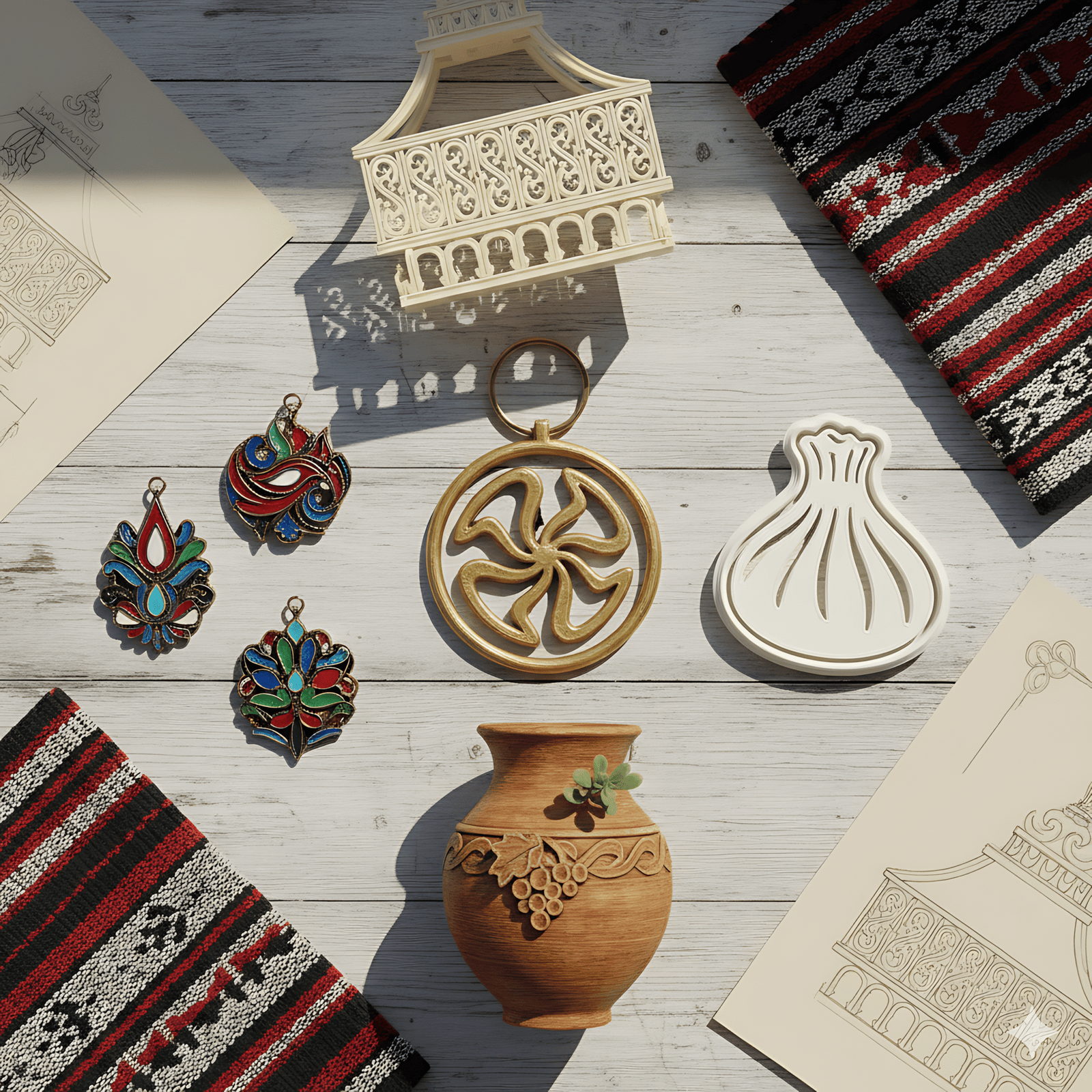
Here are a few cultural treasures ready for digital transformation, including the symbolic Borjgali (symbol of the sun and eternity) and intricate textile patterns:
| Source of Inspiration | Cultural Symbol | 3D Printed Product Idea | Why It Works |
|---|---|---|---|
| Kitchen & Wine Culture | Qvevri vessel / Khinkali shape / Ketsi dish | Desk organizers or planters inspired by Qvevri curves • Khinkali-knot cookie cutters • Mini Ketsi coaster sets | Instantly recognizable shapes that connect utility with heritage, fitting urban and modern spaces. |
| Arts & Patterns | Minankari (enamel geometry) / Jewelry Motifs | Customizable jewelry and decorative vases with intricate interlocking motifs | 3D printing excels at precise geometry, offering highly detailed, customizable pieces that preserve the technique digitally. |
| Symbolism | Borjgali Symbol(Sun/Eternity) | Keychains, small wall art, or symbolic tokens | Transforms a powerful national symbol into a personal, tactile object. It connects daily life (keys, a desk) to a deep, ancient meaning. |
| Textile & Art | Tusheti Carpetpatterns / Regional Textile Motifs | Phone cases, organizers, or textured wall panels | Functional, narrative storytelling, excellent for surface customization and reducing import reliance. |
| Architecture | Tbilisi’s ornate balconies and symmetrical facades | Bookends or lighting elements using dentil moulding motifs | Brings classical architecture into modern interiors with high structural fidelity. |
| Craft | Traditional Woodcarving Designs | Durable, scalable furniture accents and custom hardware (e.g., drawer pulls) | Blends the richness of old aesthetics with the durability and consistency of modern materials. |
Each motif tells a story—and every story can be rendered into something functional, decorative, or symbolic through 3D design.
Turning Inspiration into Objects
The process is straightforward but creative:
- Scan or Sketch: Capture a shape or pattern—from an antique, a balcony, or a motif, often using 3D scanning to create a precise digital replica.
- Model & Adapt: Re-imagine and functionally evolve it digitally in CAD software, ensuring the cultural elements remain recognizable while serving a modern purpose. This step involves engineering the design for printability—adding necessary wall thickness, optimizing orientation for strength, and ensuring cultural fidelity is maintained, perhaps by integrating structural elements that mirror traditional joinery or molding.
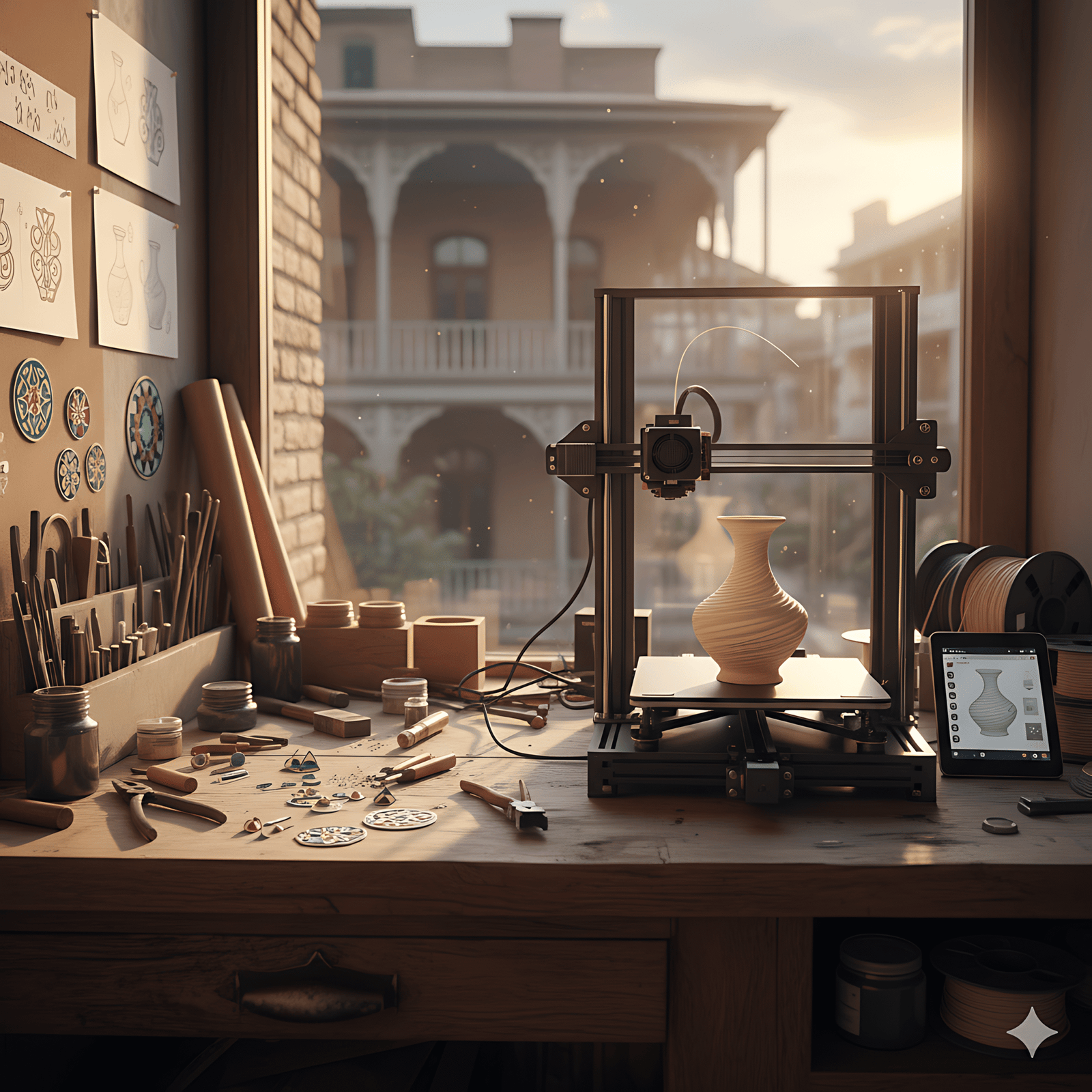
- Print: Use the right technology for the function—FDM for affordability and strength, SLA for fine details, MJF for industrial precision.
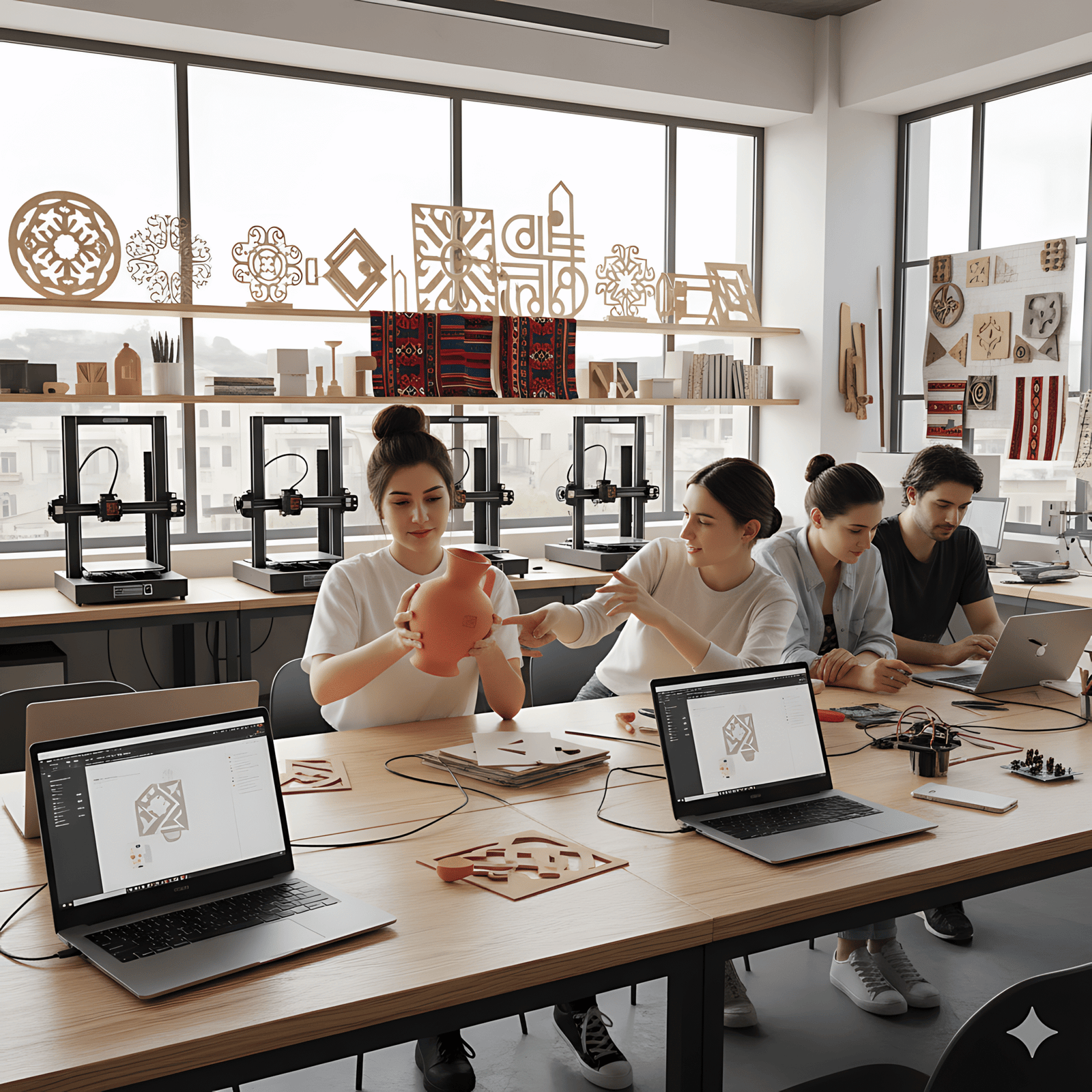
- Finish: Sand, paint, or combine with local materials like wood or clay to keep that tactile Georgian feel.
Technology becomes the new hand tool—extending the reach of tradition instead of replacing it.
Why This Matters for Designers and Entrepreneurs
- Market Differentiation: Culturally-integrated design stands out in a sea of global sameness.
- Local Production = Sustainability: On-demand printing reduces inventory and imports, strengthening the local economy. Since items are only printed when an order is placed, material waste is minimized, and supply chains are radically shortened, adding a significant ecological benefit to local manufacturing.
- Emotional Value: People connect with objects that reflect their identity and heritage.
- Export Potential: Georgia’s distinct aesthetic can become a brand signature abroad, creating new streams of revenue based on its historical IP. This shift moves Georgia from importing generic consumer goods to exporting high-value, design-led cultural products that command a premium in the global design and customization market.
The Future of Cultural Creation
As 3D printing spreads through schools, maker spaces, and artisan studios, Georgia can redefine what “local manufacturing” means.
Not mass production—but mass personalization. This allows customers to choose specific patterns, customize sizes, or dedicate text to a design derived from a national symbol.
A generation of young makers can now reinterpret national symbols through digital design, producing objects that express both pride and innovation. The revolution isn’t coming; it’s here. The next export from Georgia won’t just be wine or art—it will be design.
Join Georgia’s Makers Movement
What Georgian pattern, shape, or story would you love to see re-imagined through 3D printing?
Ready to turn your idea into exportable hardware? Contact us for a consultation today.
Leave a Reply