


A year ago, preparing one simple 3D model could easily mean moving between two or three different tools. We might create a reference image in one place, build or convert the form somewhere else, repair the mesh in another program and finally open CAD or a slicer to make it printable.
Today, on the right kind of project, one AI platform can take us from a description or image to a usable starting model, help repair it, divide it into parts and export it for printing. Something that once consumed hours can sometimes reach the preparation stage in about fifteen minutes.
That change is real—and genuinely exciting. But “faster” does not mean “automatic.”
Fifteen minutes can be real—but it is not magic
The new tools are becoming much more useful. Text-to-3D and image-to-3D systems can produce meshes in minutes. Some now include printability checks, automatic repair, resizing, part separation and direct STL or 3MF export. A different generation of AI-native CAD tools can create editable parametric geometry rather than only a fixed mesh.
This removes a surprising amount of repetitive work. It also changes where our time goes: less time building every first draft manually, more time choosing a direction, testing it and improving the details that matter.
Still, AI does not know the real object as well as the person making it. It may create a wall that is too thin, a beautiful overhang that needs impossible support, a hole with the wrong tolerance or two parts that look connected but will separate during printing. A model can appear perfect on screen and remain unsuitable for its material, printer or intended use.
The better you know the craft, the more useful AI becomes
Good results require more than writing one attractive sentence.
You need to know how to describe geometry clearly, which references will guide the model and when a prompt has become too vague or too complicated. You also need enough CAD experience to edit dimensions, rebuild a weak feature or move the model into a better tool when necessary.
Most importantly, you need 3D-printing knowledge: wall thickness, tolerances, orientation, supports, layer direction, material behaviour and the limits of the actual machine. AI can propose a shape. It cannot take responsibility for how that shape behaves in the physical world.
This is why an experienced maker may produce something useful in fifteen minutes while another person receives an attractive but unprintable file from the same tool. The speed comes not only from AI, but from knowing what to ask, what to distrust and what to fix.
More people can now turn expertise into objects
This development matters far beyond 3D-printing studios.
An educator can turn a lesson idea into a tactile model, compare several forms and adjust the object before committing time and material to a print.
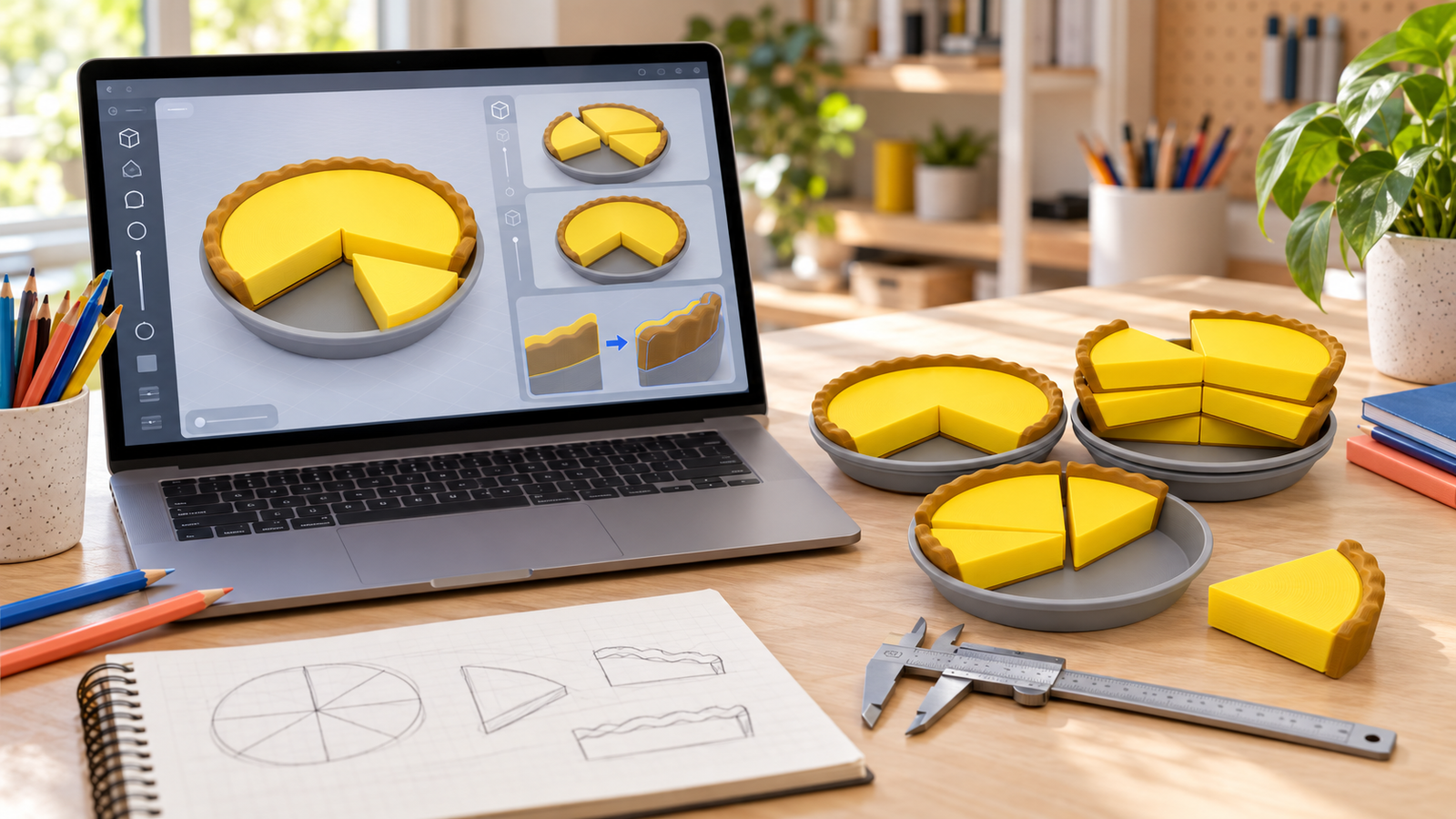
For education, AI can shorten the route from a lesson idea to a physical learning tool. The teacher still decides what the object should teach and how it should be used.
A fashion designer can explore a lattice accessory, wearable structure or unusual surface and see the idea in three dimensions much earlier in the process.
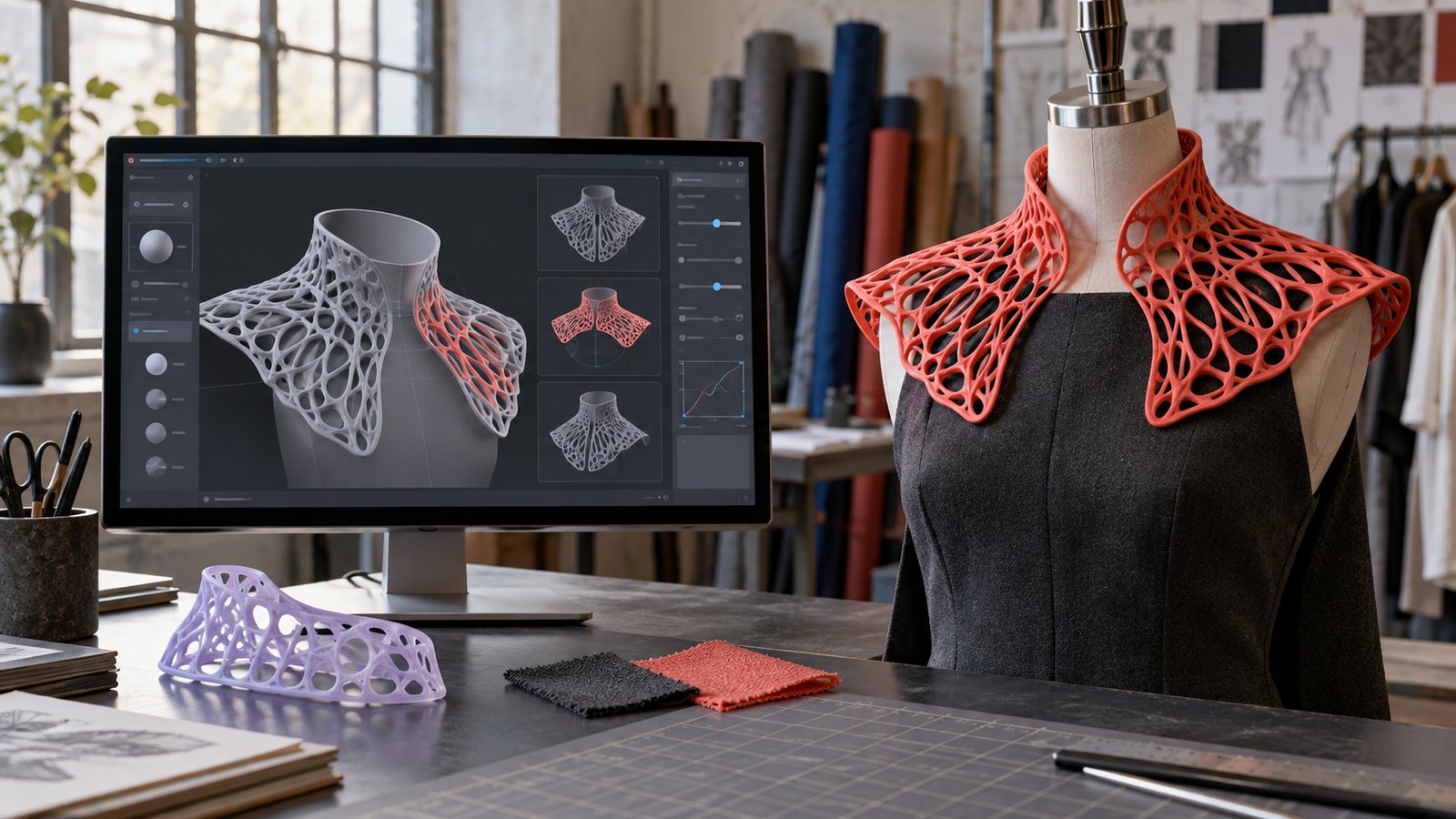
In fashion, AI can accelerate form exploration, while the designer still resolves fit, movement, material and comfort.
An automotive team can prototype an air duct, bracket or ergonomic detail before committing to expensive tooling. Architects can study facade modules and spatial forms. Product designers can compare handles, enclosures and mechanisms. Museums and cultural organisations can develop replicas or accessible teaching objects, with the appropriate rights and accuracy review. Film, theatre and game teams can move more quickly from visual concept to physical prop.
AI does not make all these people 3D designers overnight. It gives their existing expertise a faster route into three dimensions. The teacher still understands the lesson. The fashion designer understands the body. The engineer understands loads and tolerances. The maker understands how the printer will translate an idea into layers.
A faster beginning, not the end of the process
At 3D Vinci, we see AI as a very capable new assistant. It can shorten the distance between an idea and the first object, help us explore more alternatives and make custom work realistic in situations where the preparation time once made it impractical.
But the goal is not to print whatever AI gives us. The goal is to use the time it saves for better decisions.
We still inspect the geometry. We still adapt the model to the material and machine. We still test, measure and revise. And we still decide whether the object is useful, clear and worth making.
Because these tools are changing so quickly, we will continue this subject in future blog posts. We will look more closely at the best AI tools for creating, repairing and preparing 3D models—and explain which kinds of work each one actually handles well.
AI has made the first fifteen minutes much more powerful. Experience determines what happens next.
Leave a Reply