

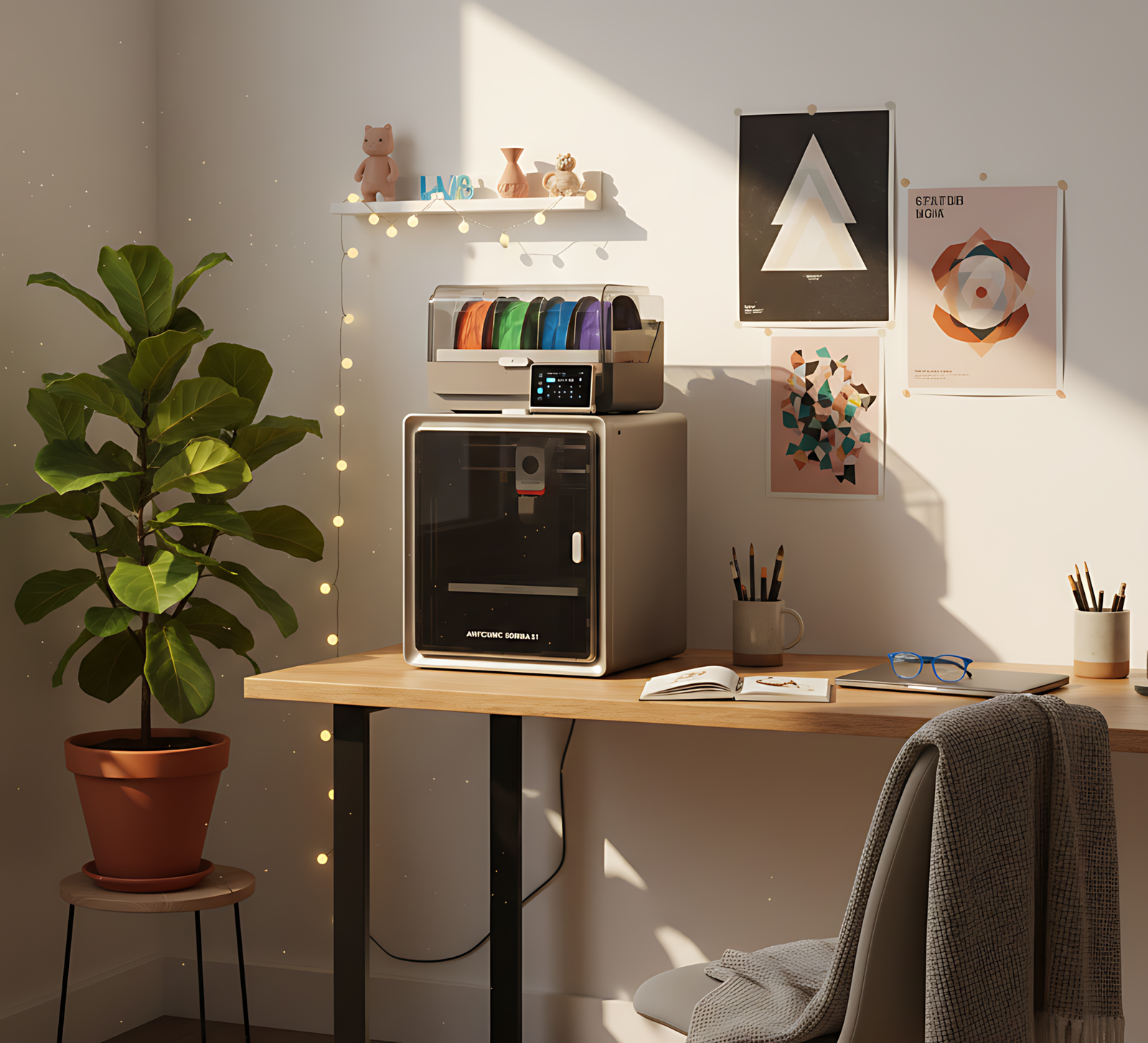
3D printing has a branding problem.
Not because it’s boring. Not because it’s niche. But because it looks like one of those things you’re supposed to be “smart enough” to understand before you’re allowed to touch it.
You know the category.
Coding. Mechanical keyboards. Film cameras. DJ decks. Anything with knobs, jargon, and a community that says “it’s actually really simple” right before explaining it in a way that makes you feel illiterate.
3D printing lives right there.
From the outside, it’s slicers, tolerances, filaments with personalities, and forums where someone named Dave tells you your problem is obvious and you should have known better. It feels less like a tool and more like a test.
And that’s not an accident.
Complexity as a Gate, Not a Bug
Pop culture loves complexity when it can be used as a filter.
We see it everywhere. The cool camera has manual settings. The real music producer uses analog gear. The “serious” gamer builds their own PC. Difficulty becomes proof of legitimacy.
3D printing got swept into that same mindset.
Somewhere along the way, it stopped being “a machine that makes stuff” and turned into “a skill you earn.” The more complicated it looks, the more respect it commands. Complexity becomes social armor.
If you can master this, you belong here.
That attitude doesn’t come from the technology itself. It comes from the people around it protecting their identity. When something becomes easier, the status drops. So we dress it up in acronyms and warnings and advanced settings and act shocked when newcomers feel unwelcome.
The Myth of the “Technical Person”
Another reason 3D printing feels intimidating is because it gets quietly labeled as something only a certain type of person does.
You know the stereotype.
Technical. Logical. Usually male. Probably owns at least one hoodie from a startup that doesn’t exist anymore.
If you don’t see yourself in that image, your brain fills in the rest. This isn’t for you. You’ll mess it up. You’ll ask a dumb question. You’ll break something expensive.
Pop culture reinforces this constantly. In movies and shows, the person with the machines is always the genius in the corner. Rarely the main character. Rarely the girl. Rarely someone who learned by trial and error instead of formal permission.
So people self-select out before they even try.
Tools That Look Serious Feel Serious
Let’s be honest. 3D printers don’t help their own case.
They’re loud. They look industrial. They have exposed parts that move like they mean business. There’s something about watching a machine build an object layer by layer that feels like you should stand back and not breathe wrong.
Compare that to software. Apps hide complexity behind smooth buttons and friendly animations. 3D printing shows you everything. Every mistake. Every failure. Every spaghetti disaster in full view.
That visibility makes it feel high stakes, even when it isn’t.
Most failed prints are annoying, not catastrophic. But visually, they look dramatic. Like you did something very wrong and the machine is judging you for it.
Here’s the Part No One Likes to Admit
The intimidating aura around 3D printing benefits the industry in a weird way.
It creates mystique. It makes the results feel impressive. It lets companies, creators, and communities position themselves as experts instead of guides.
But it also slows adoption. It keeps curious people at arm’s length. It turns what should be playful into something performative.
And that’s a shame, because at its core, 3D printing is deeply human.
It’s experimenting. It’s messing up. It’s thinking “I wish this existed” and refusing to accept that it doesn’t. It’s not about precision first. Precision comes later.
The Reality Behind the Curtain
Once you’re actually in it, the intimidation collapses fast.
You realize everyone is Googling things constantly. You realize half the “rules” are flexible. You realize the experts also have failed prints stacked in drawers they don’t post.
The machine doesn’t care who you are. It doesn’t care if you learned from YouTube, your family business, or pure stubbornness. It responds to curiosity, not credentials.
3D printing isn’t hard because it’s exclusive. It’s hard because making things is hard. That’s different.
And maybe the real shift needs to be cultural, not technical. Less gatekeeping. Less posturing. More “try it and see what happens.”
Because the moment people stop treating 3D printing like a secret society and start treating it like what it is, a tool for making ideas physical, it stops being intimidating.
It starts being fun.
Final Thoughts
3D printing doesn’t need to be demystified as much as it needs to be reframed.
It isn’t a personality type. It isn’t a badge of intelligence. It isn’t something you’re either “good at” or “not built for.” It’s a tool that looks serious because we’ve decided seriousness equals value.
But the people who get the most out of it aren’t the ones chasing perfection. They’re the ones willing to press print, watch it fail, and try again without turning it into a referendum on their competence.
If the space feels intimidating, that says more about the culture around it than the technology itself. Tools should invite curiosity, not demand confidence upfront.
3D printing is at its best when it’s treated less like a gated skill and more like what it’s always been underneath the jargon: a way to make ideas tangible. No permission required.
Once that clicks, the fear fades. What’s left is possibility. And a lot of half-finished prints, but that’s part of the deal.
Leave a Reply