

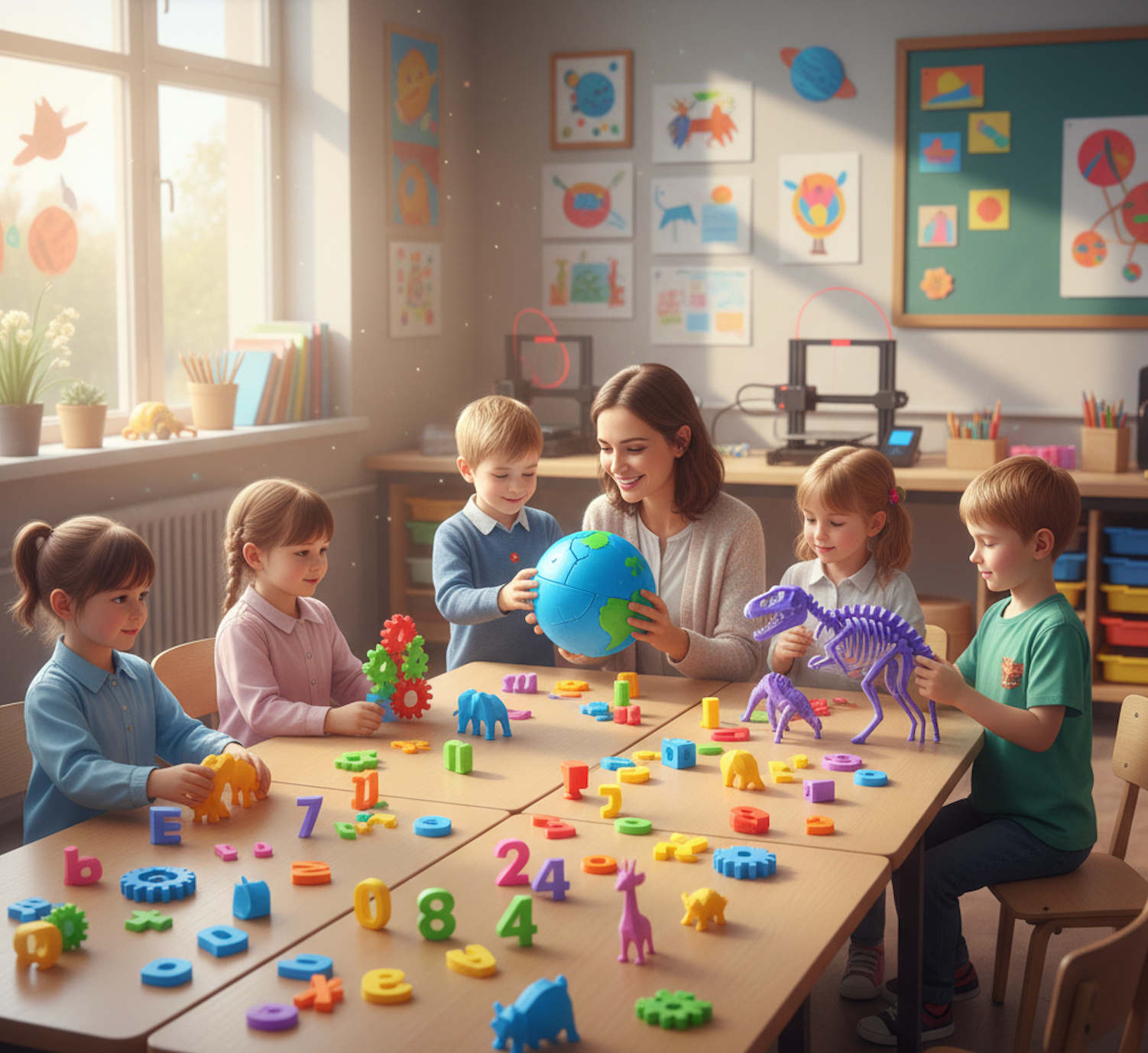
Is this what you think? That 3D printing is too complicated for young children?
Many teachers assume this technology is for older students – middle schoolers learning CAD software or high schoolers doing engineering projects.
But here’s what I’ve discovered working with children from kindergarten through sixth grade: 3D printing might be mostpowerful with our youngest learners.
Not because they’re designing complex models. But because everything they’re learning needs to be touched, held, and experienced through their senses.
How Young Children Learn
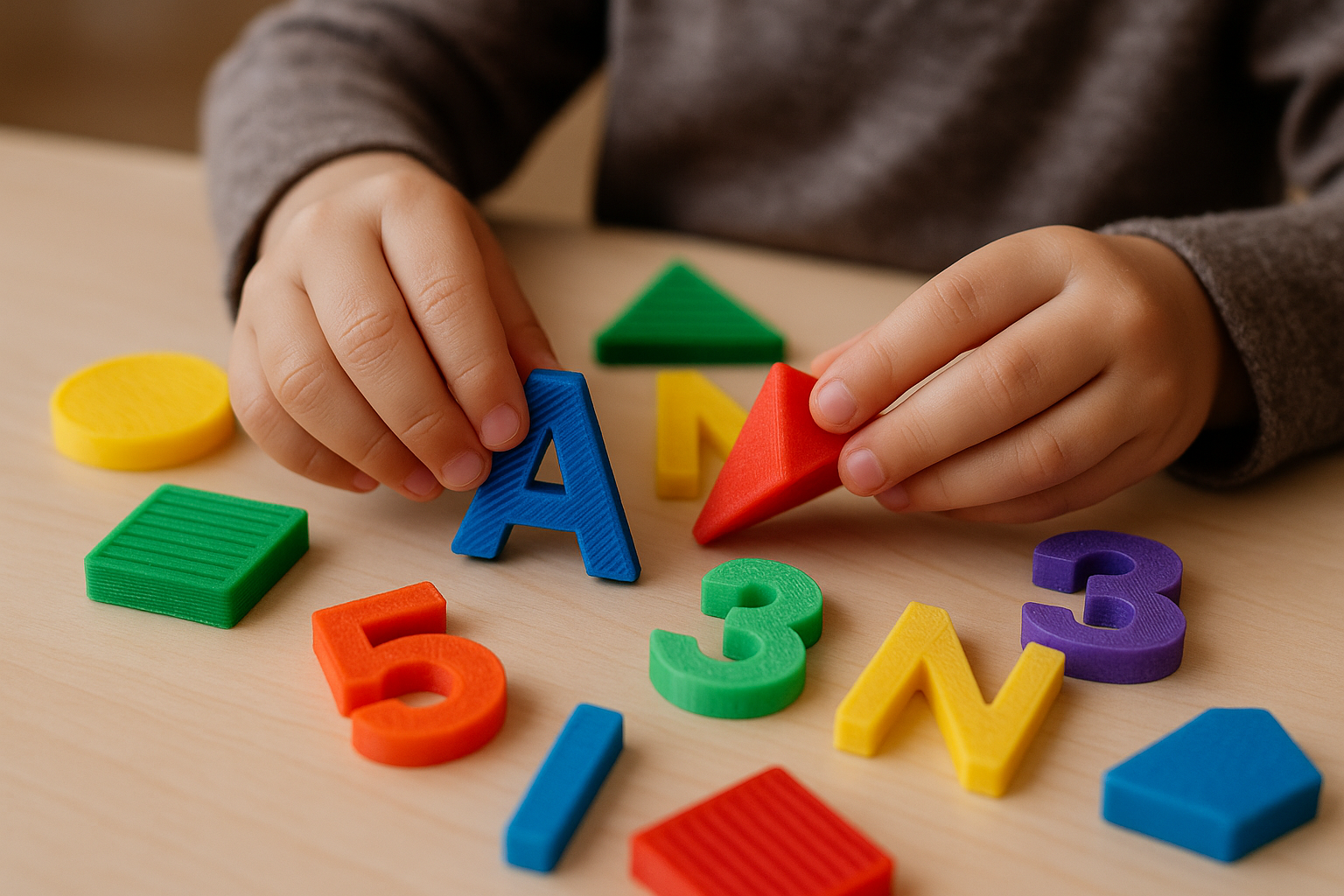
Primary grade students are concrete learners. Abstract concepts don’t stick yet. They need to see, touch, manipulate, and explore with their hands.
This is why primary classrooms are full of manipulatives – counting bears, pattern blocks, letter tiles, tangrams. These aren’t just toys. They’re essential learning tools that make abstract ideas concrete.
But here’s the challenge: those manipulatives are generic. They work for general concepts, but they don’t connect to the specific stories, themes, and lessons you’re teaching.
What if you could print manipulatives designed exactly for what your students are learning right now?
Bringing Stories to Life
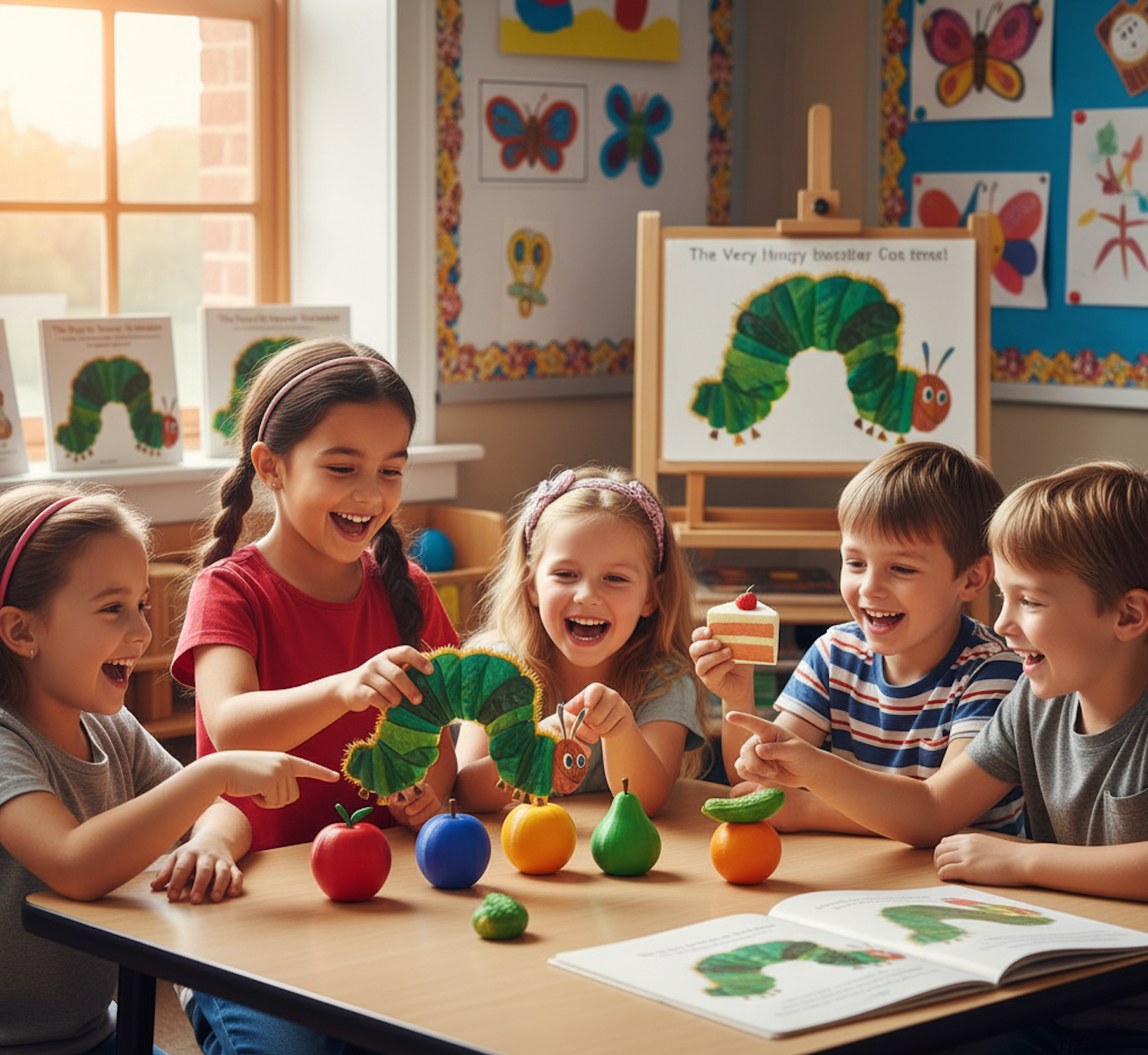
When first graders read The Very Hungry Caterpillar, they’re learning sequencing, days of the week, and counting. You can explain these concepts. You can show pictures.
Or you could print the foods the caterpillar eats – each one labeled with the day and number. Students can physically sequence them, count them, act out the story with objects they can hold.
The story characters your students are drawing in art class? They can become 3D figures. A child draws their favorite character from a book, you help convert that drawing into a simple 3D model, and suddenly their imagination becomes something they can play with.
At William Penn Carter School in Philadelphia, pre-kindergarten students printed their own designs of bird nests for a unit on birds. The lesson wasn’t about 3D printing. It was about birds. The printing just made their learning tangible.
Custom Educational Resources for Your Classroom
Every primary teacher knows the struggle: you find a great activity idea, but the materials cost too much or don’t quite fit your needs.
With 3D printing, you become the creator of your own educational resources.
Alphabet learning: Print textured letters that students can trace with their fingers. Make letters in different sizes for sorting activities. Create letters that connect together for building words.
Number sense: Print number grids students can physically manipulate, or create interlocking pieces that help visualize number relationships. Design counting objects specific to a theme you’re teaching – if you’re doing a unit on ocean animals, print sea creatures for counting instead of generic bears.
Pattern practice: Create custom pattern blocks that match your current theme. Learning about shapes? Print 3D versions of each shape students can examine from all angles.
The beauty of this: you design it once, print it, and use it year after year. The initial time investment pays back every time you teach that unit.
Sensory Learning Tools
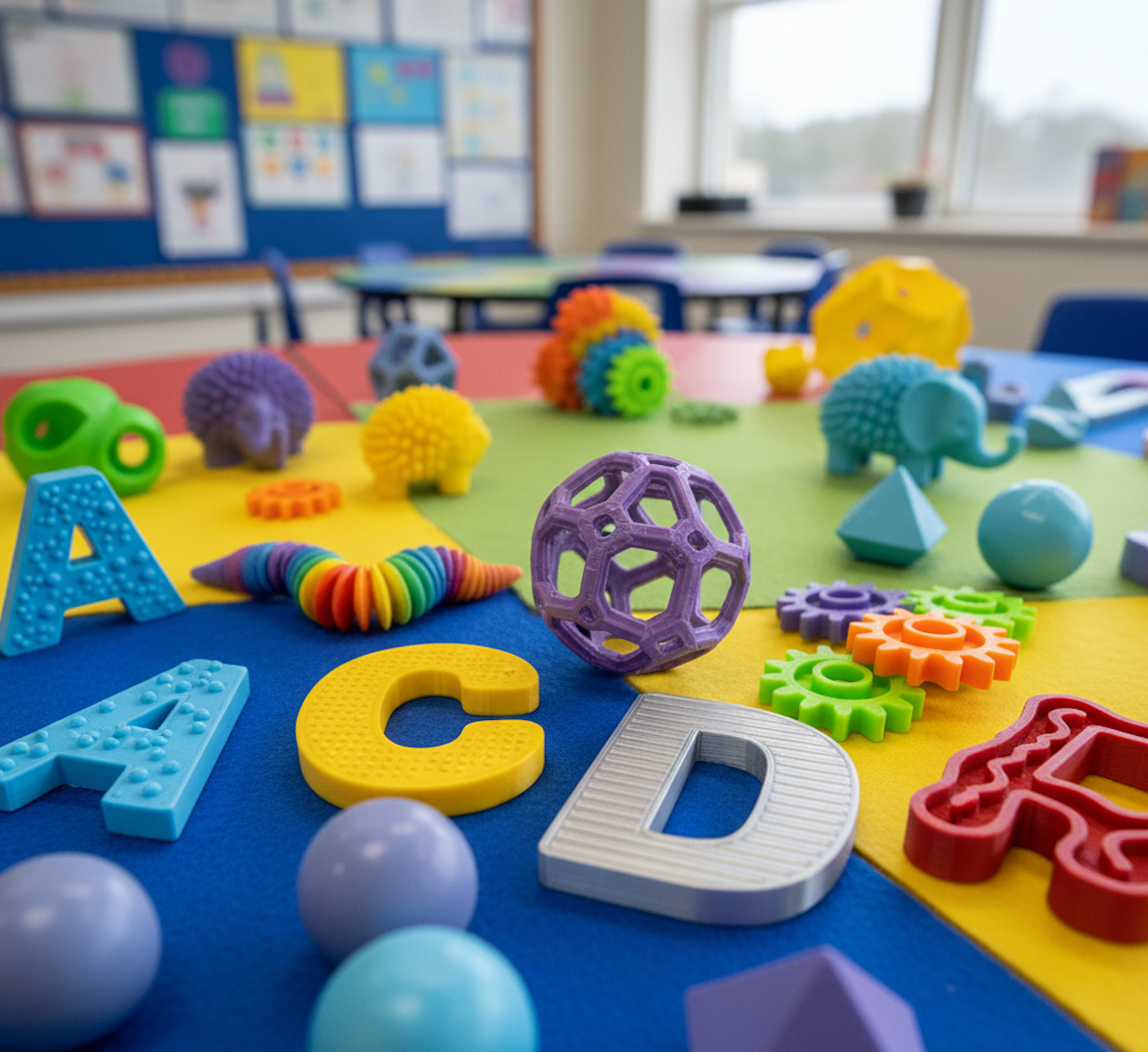
Fidget toys have gained popularity for providing comfort and aiding concentration for kids with sensory needs in the classroom. Instead of buying expensive commercial sensory tools, you can print them.
Textured objects for tactile exploration. Calm-down fidgets customized for specific students’ needs. Manipulatives with different weights and surfaces for sensory input.
But sensory learning isn’t just for students with identified needs. All young children learn better when multiple senses are engaged. A math lesson becomes more memorable when students can feel the weight of ten cubes versus five cubes. A science concept sticks when they can touch a model and turn it around in their hands.
From Book to Toy: Student-Created Characters
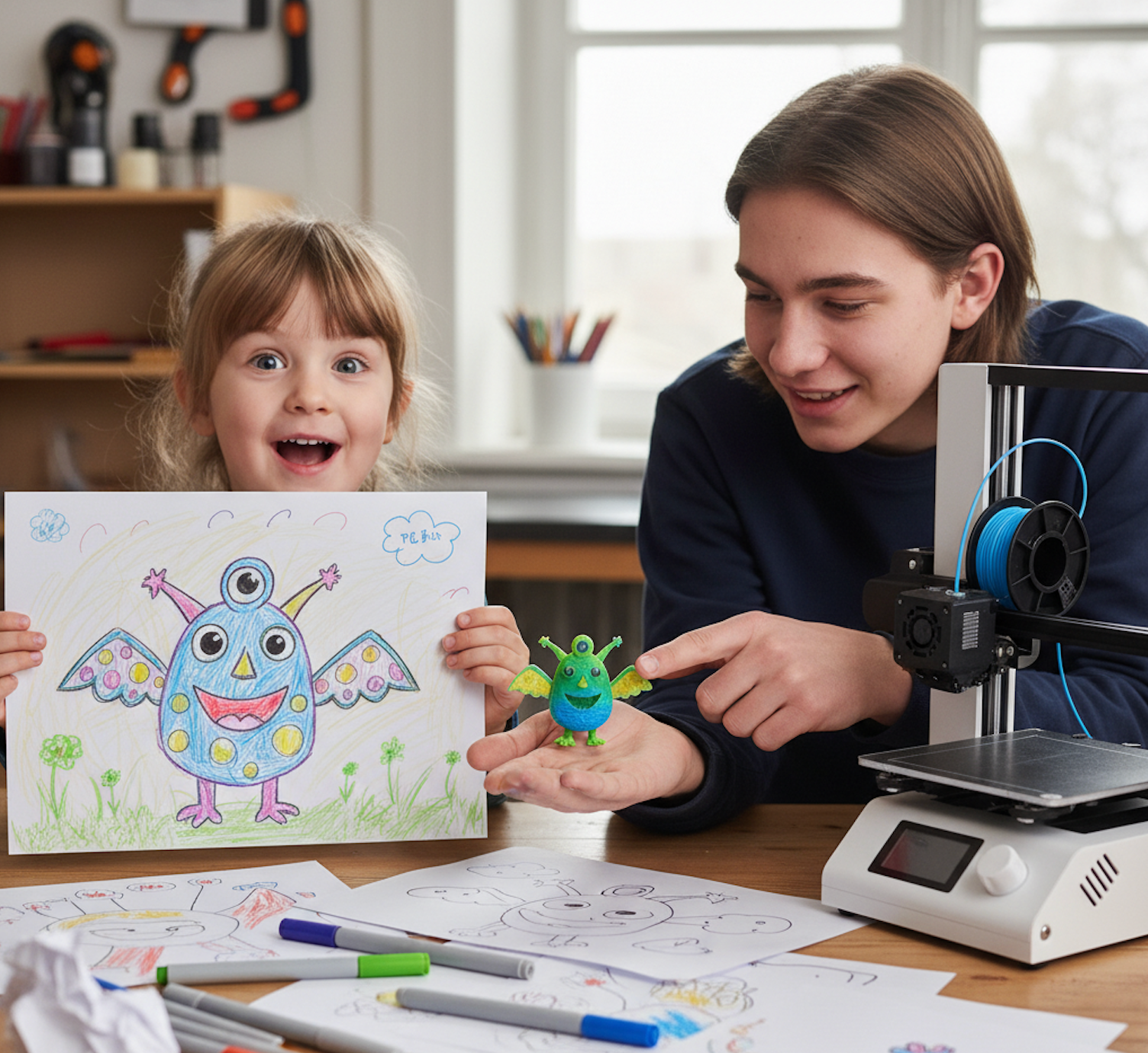
Here’s one of my favorite primary applications: students draw characters, and those drawings become toys they can play with.
The process is simple:
- Student draws their character (from a story or their imagination)
- Teacher or older student helps convert the drawing to a basic 3D design
- Print the character
- Student plays, tells stories, brings their creation to life
This works for any age. Kindergarteners drawing family members. First graders creating characters for their own stories. Second graders designing historical figures they’re learning about.
The drawing becomes real. The imagination becomes tangible.
Developmental Toys Custom-Made for Learning
First graders learning about the Engineering Design Process can design cookie cutters to use as testing tools when experimenting with play dough recipes. They’re learning science, problem-solving, and design thinking – all through creating something they’ll actually use.
Second graders studying balance and motion can design spinning tops, testing their understanding of physics concepts through their designs. The toy isn’t separate from the learning – it is the learning.
Puzzle pieces that teach sight words. Stacking toys that reinforce size concepts. Game pieces for math practice. Tools for dramatic play that connect to social studies units.
Each of these serves a specific learning goal while being engaging enough that students want to use them.
Addressing the Practical Question
“But can young children really design things in 3D?”
Here’s the truth: they don’t have to.
In primary grades, the teacher often does the design work – with student input. Students describe what they want, draw it, share their ideas. You translate those ideas into simple 3D models.
Or older students help younger ones. Fourth graders designing for kindergarteners. Fifth graders helping second graders bring their drawings to life.
The primary students aren’t learning CAD software. They’re learning that their ideas can become real. That imagination can be translated into physical objects. That design is about thinking through what you want to create.
Those are the foundational concepts. The technical skills come later.
Why This Works for Young Learners
Young children are naturally makers. They build with blocks. They mold with clay. They draw and cut and glue and construct.
3D printing is just another making tool – one that happens to create permanent, usable objects from their designs.
The difference from traditional crafts: these objects can be precise. They can be duplicated. They can be designed to fit specific educational purposes.
A child’s drawing becomes a teaching tool. A class brainstorm becomes a set of manipulatives. A student’s imagination becomes a toy they can hold.
Starting Small in Primary Grades
If you’re a primary teacher interested in exploring this:
Start with one unit you already teach. What manipulatives would make that lesson better? What objects from books could become real for students?
Think about what your students struggle to understand. Could a physical model help? Could they manipulate something to explore the concept?
Consider your current themes. Could you print relevant objects that connect to those themes?
You don’t need every student designing on computers. You need thoughtful application of a tool that makes learning more concrete.
Because primary students learn by touching, exploring, and playing. 3D printing just gives you more ways to let them do exactly that.
👉 Explore more insights at 3dvinci.space/blog
💬 Or share your thoughts below — we’d love to feature your story!
Leave a Reply