
There are forms we recognise before anyone explains them. A silhouette and a few familiar details are enough: a chokha, a traditional Georgian dress, a Svanetian tower.
For us, these forms feel familiar long before we turn them into 3D models. Perhaps that is exactly why we want to work with them carefully. We do not want to add a Georgian motif to an object simply to make it look “local.” We want the form itself to have a reason to be there.
Our starting question is usually simple: can this familiar shape become something we genuinely use?
A penholder, vase or small planter should still do its job well. The cultural reference should give the object character, not replace its function. That balance is what we are trying to find with pieces such as our Chokha Pen Holder, Georgian Traditional Dress Vase and Svanetian Tower Pen Holder/Planter.
Why function matters to us
A decorative object can be beautiful, yet after a while it may become something we stop noticing. A useful object builds a different relationship with us. We reach for it, move it, fill it and make it part of a small daily ritual.
That is what we like about functional décor. The form does not have to remain something we only admire from a distance, and it does not have to become just another souvenir. It can quietly become part of a desk, a shelf or a table—and stay close through use.
The Chokha Pen Holder: a familiar form on the desk
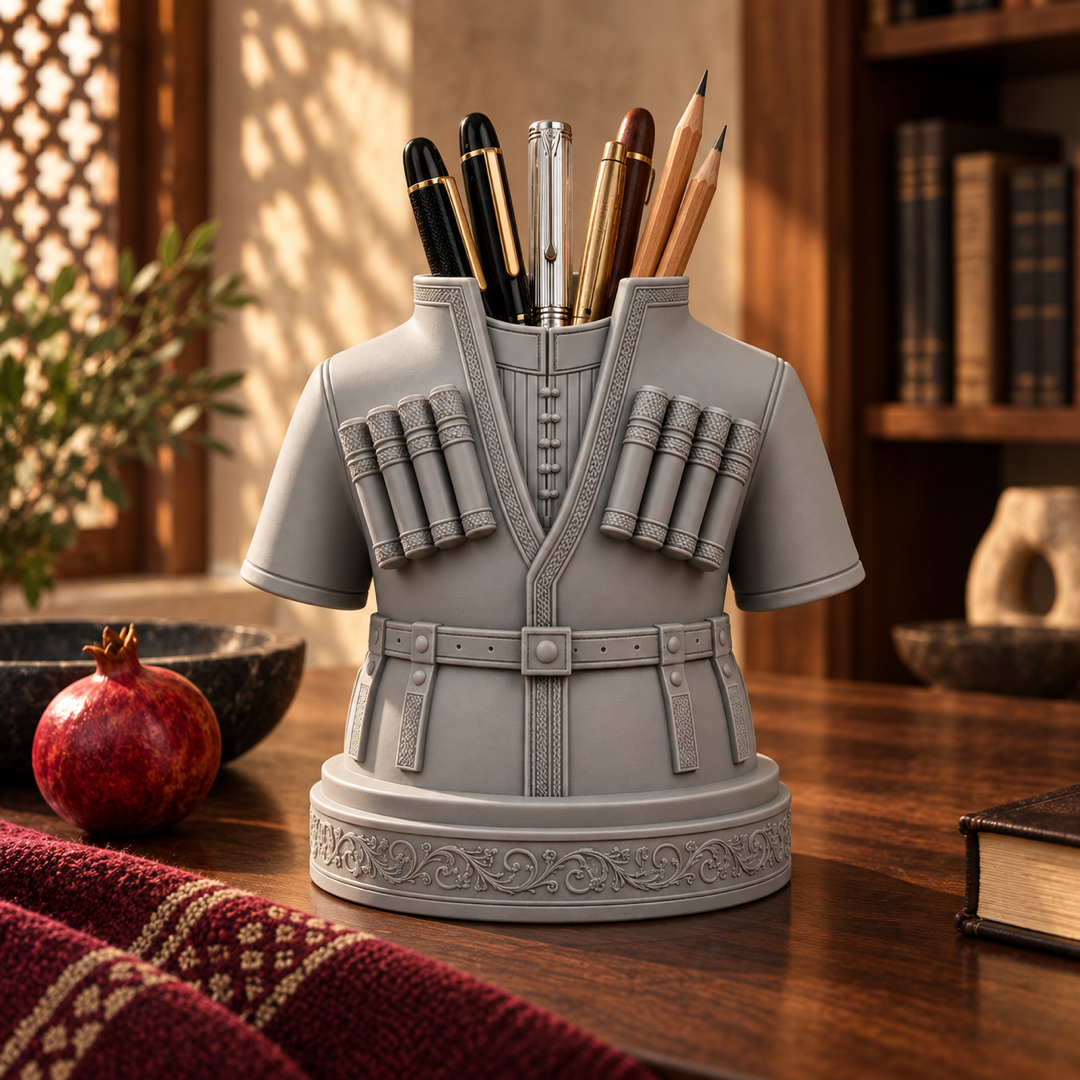
The Chokha Pen Holder was one of the clearest examples of this idea for us. The shoulders, front lines and small details make the reference immediately recognisable, while the open upper part naturally becomes a place for pens, pencils or brushes.
We especially like how the object changes when it is used. Black pens make it feel restrained and formal; coloured pencils and paintbrushes make it playful and creative. The reference stays the same, but the person using it gives it a new mood.
On a work desk, in a studio or in a study corner, it is not only a miniature form to look at. It has a job to do.
The Georgian Dress Vase: letting flowers complete the form
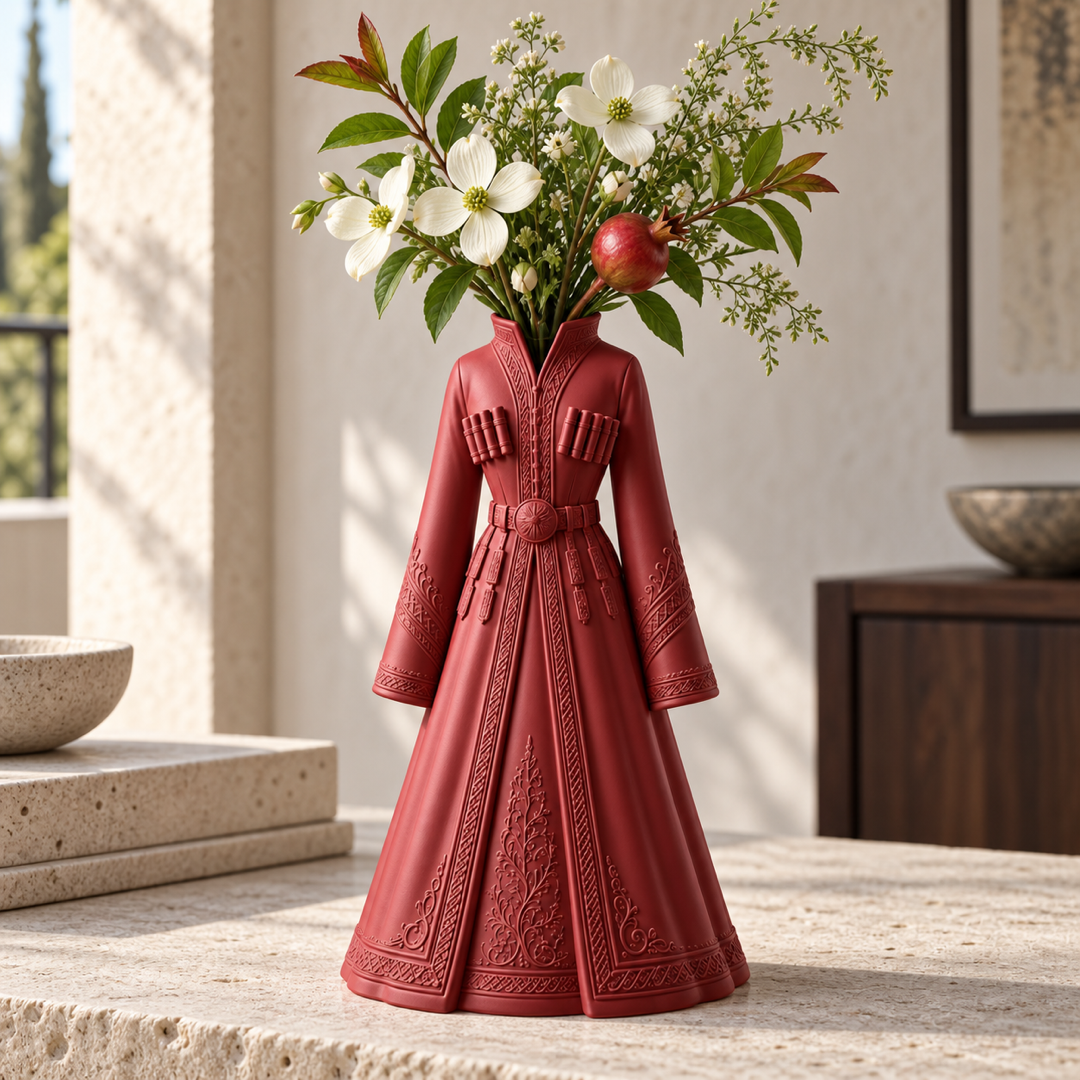
The Georgian Traditional Dress Vase began with a very different silhouette. Its long lines and flared shape already have a sense of movement, so a vase felt like a natural function rather than something added afterwards.
When flowers or branches are placed inside it, they seem to continue the form. A light arrangement makes the piece feel delicate; stronger colours give it a completely different presence. We love that the vase is never quite finished on its own—the person arranging it becomes part of the final composition.
We are not trying to reproduce traditional clothing as a small museum object. We are translating a familiar silhouette into contemporary décor that can take part in everyday life.
A familiar silhouette changes with every new arrangement of flowers.
The Svanetian Tower: one strong form, two everyday uses
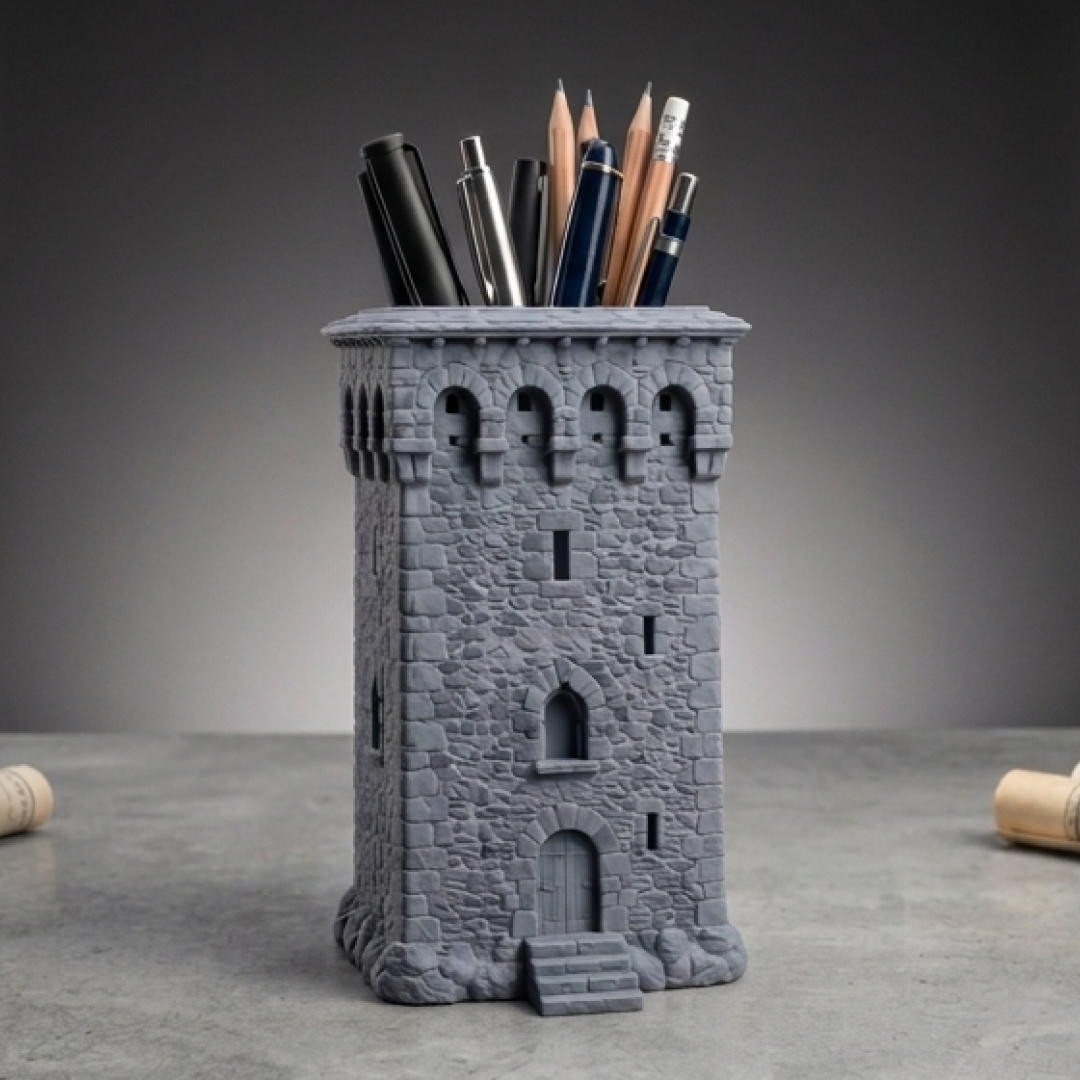
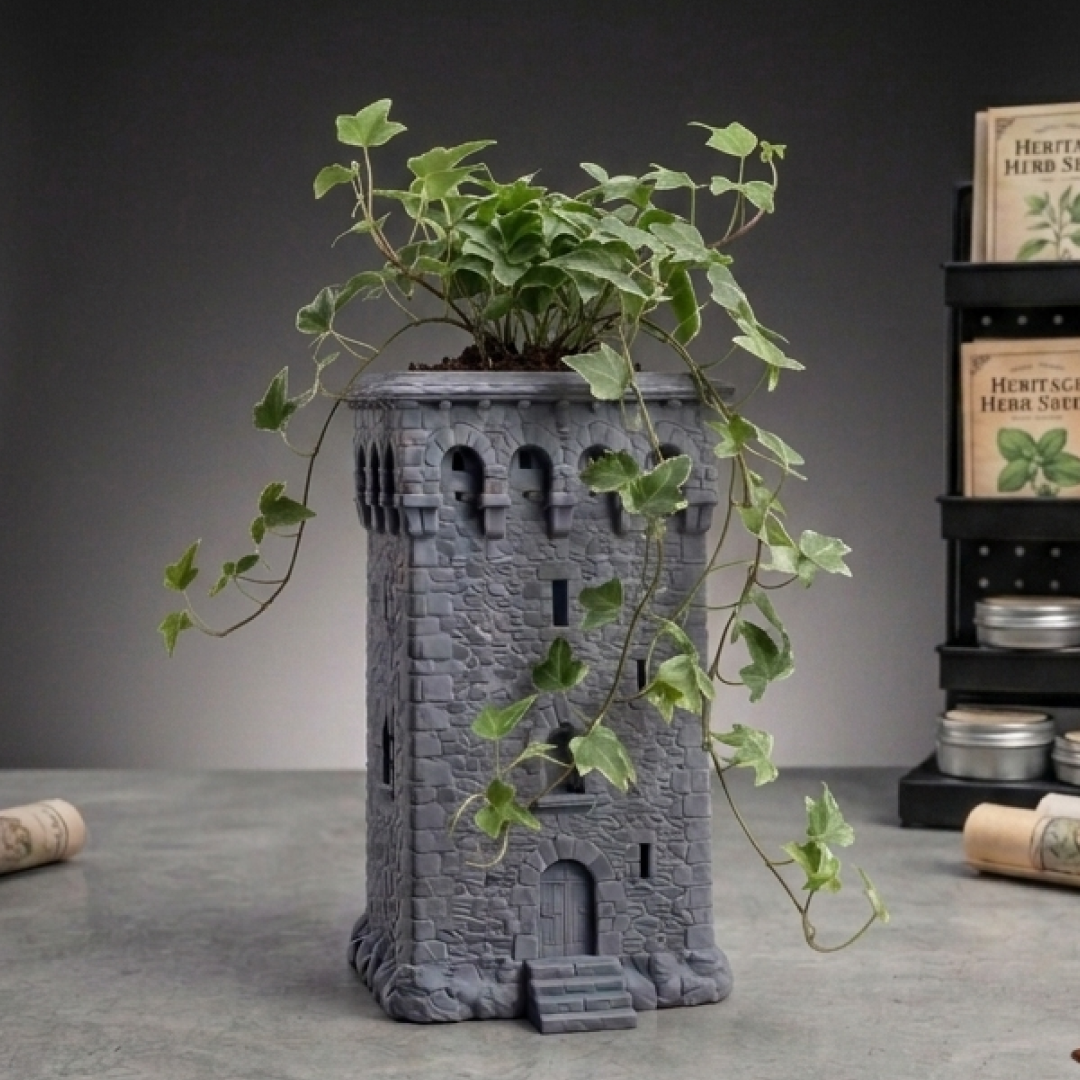
The Svanetian Tower Pen Holder/Planter has a more architectural character. As a penholder, its vertical form brings a sense of order to a desk. Styled with a small plant, the same solid structure becomes softer and more alive.
We are drawn to that contrast: stone-like walls and trailing green leaves; a historic architectural reference and a very ordinary daily function. The object can hold the tools we work with or become a small green presence beside them.
Place the next two images in a two-column gallery here so readers immediately see the same object in both roles.
The same tower-inspired form can bring order to a desk or greenery to a shelf.
Designing between memory and modern life
The most difficult part of this work is knowing when to stop. With too little detail, the connection disappears. With too much, the object can begin to feel theatrical. We look for a quieter balance: enough detail for the form to be recognised, enough restraint for it to live naturally in a contemporary interior, and a function that feels honest rather than forced.
3D printing gives our team room to test that balance. We can reconsider proportions, scale, surface details and colour, then see how the object changes once it is placed in a real setting and actually used.
This is still an ongoing exploration for us. Not every traditional form needs to become a product, and familiarity alone is not enough. With each idea, we try to ask two questions: does it do more than look familiar, and would we want to live with it every day?
Keeping tradition close
Tradition does not always have to stand apart from daily life. Sometimes it can hold the pens we reach for each morning, the flowers we bring to the table or a small plant growing beside our work.
We know that an object cannot carry the full history or meaning of the form that inspired it. But it can create a small moment of recognition, open a conversation and keep something familiar within reach.
That closeness is what we hope to create: Georgian forms treated with care, given a useful new role and made to live with us—not only to be looked at.
Leave a Reply