

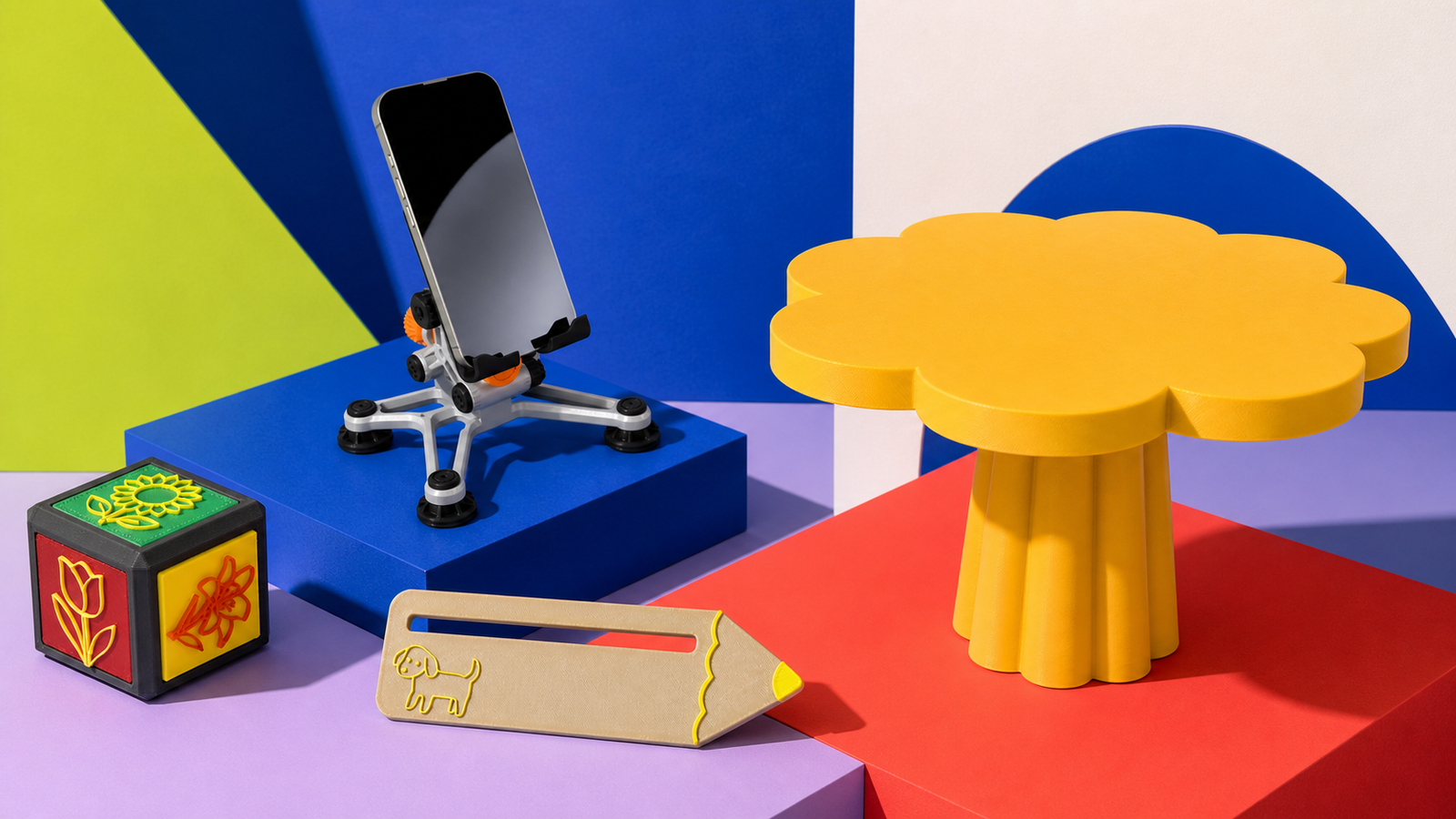
I love 3D printing enough to say something that may sound slightly disloyal to the technology:
Not everything needs to be 3D printed.
When you first discover what a 3D printer can do, the possibilities feel almost intoxicating. You open a model library looking for one useful object and, two hours later, you have saved a folding dragon, a geometric planter, six cable organizers, a lamp you do not have space for, and a tiny articulated shark whose purpose appears to be existing.
Then the printer starts working. The first object is exciting. The second is clever. By the fifteenth, you may have a table full of colorful things and no clear answer to a very simple question:
Why did I make these?
There is nothing wrong with printing something simply because it is fun. Play matters. Curiosity matters. A ridiculous little object can teach you about supports, tolerances, filament behavior, or how quickly a family member can steal something from your desk.
But the fact that an object can be printed does not automatically mean it is worth the material, electricity, machine time, troubleshooting, and space it will occupy after the novelty disappears.
That distinction matters for hobbyists. For anyone trying to build a business around 3D printing, it matters even more.
When Possibility Becomes Paralysis
People often assume that having more options makes choosing easier. Sometimes it does. But when the options are complex, the decision is difficult, and you are not yet certain what you want, more choice can make the decision harder rather than easier.
Research on “choice overload” does not say that many options are always bad. It shows something more useful: overload becomes more likely when the choice set is complicated, the task is demanding, and the person making the decision does not yet have clear preferences.
That describes the beginning of 3D printing almost perfectly.
You can print toys, tools, spare parts, planters, jewelry, classroom materials, prototypes, organizers, decorations, costumes, lamps, signs, molds, miniatures, and objects that do not fit comfortably into any category. Every new video or model page creates another possible direction.
The result is strangely discouraging. Some people do not quit 3D printing because the machine is too difficult. They quit because the question “What should I print?” never becomes a satisfying answer. They jump between unrelated projects, collect files they never open, produce objects they do not need, and eventually stop using the printer altogether.
For business, the same problem becomes more expensive.
You can spend months trying keychains, planters, toys, jewelry, desk organizers, spare parts, school resources, gifts, and custom decorations. You are always busy, but you are not necessarily learning who your customer is or why they would choose you.
Infinite possibility looks like opportunity. Without focus, it can become a very efficient way to avoid making a decision.
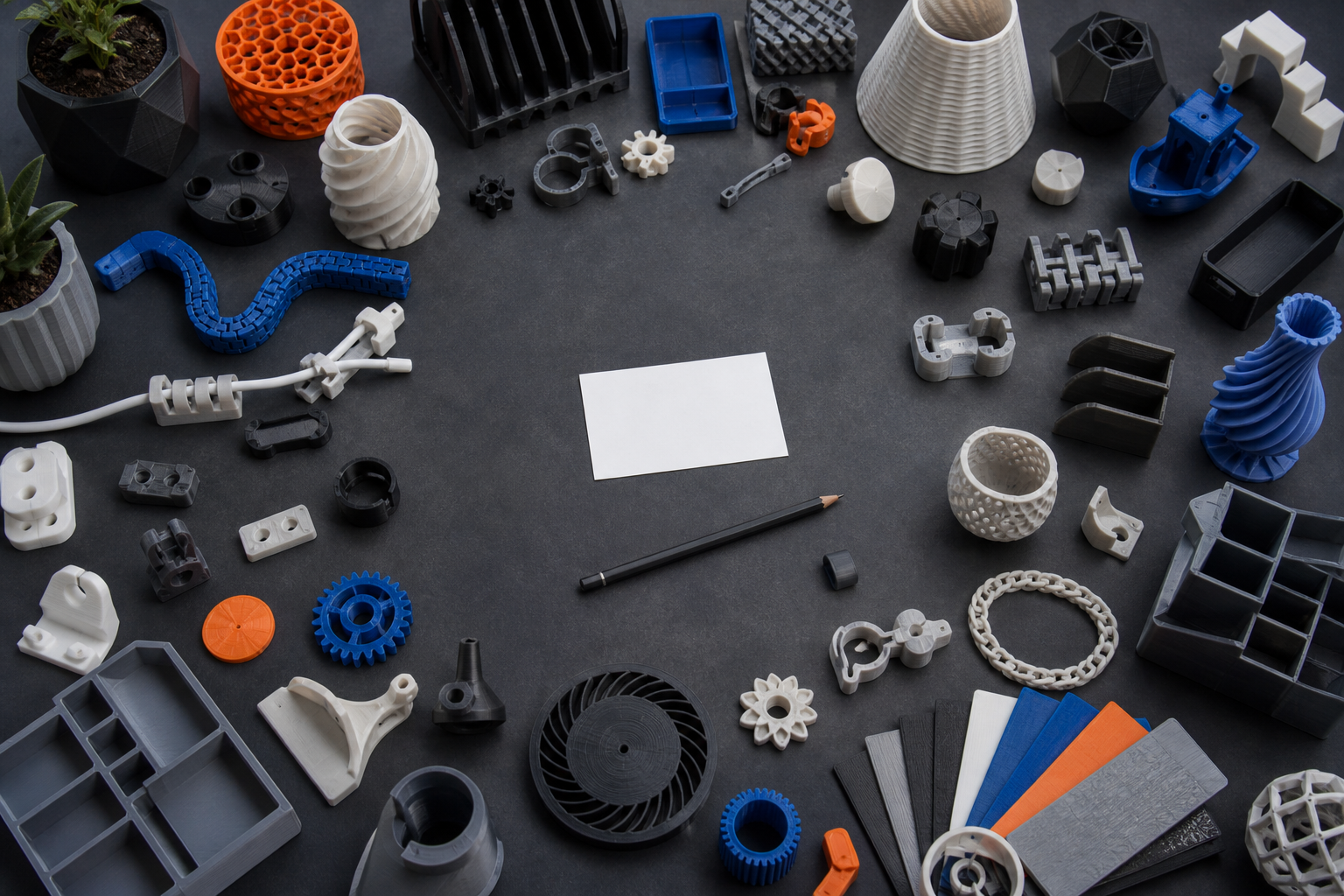
First, Decide What Kind of Print This Is
Before deciding whether an object is “worth” printing, it helps to stop judging every print by the same standard.
A print can be:
- Play: made for enjoyment, curiosity, or the simple pleasure of watching an idea become physical.
- Practice: made to learn calibration, design, materials, tolerances, finishing, or troubleshooting.
- A prototype: made to answer a question before committing to a final design.
- A useful object: made to solve a specific problem for a specific person.
- A product: made because a defined customer has a reason to want it and a reason to choose this version.
A calibration model does not need to become a business. A funny gift does not need to justify itself through efficiency. A prototype is allowed to fail.
Confusion begins when we mistake one category for another—when practice pieces become inventory, novelty becomes a product strategy, or a popular downloadable file is treated as proof that real customers want another version of it.
Five Questions Before You Press Print
1. Does it solve a specific problem?
“It looks cool” is a valid reason for a personal print. It is a weak foundation for a useful product unless the aesthetic experience is genuinely the value.
A stronger starting point sounds like this:
- This drawer no longer closes because one small clip broke.
- This teacher needs a tactile model for one particular lesson.
- This cable organizer must fit a desk that standard organizers do not fit.
- This event needs a small number of personalized markers by a fixed date.
The more precisely you can describe the problem, the easier it becomes to judge the result.
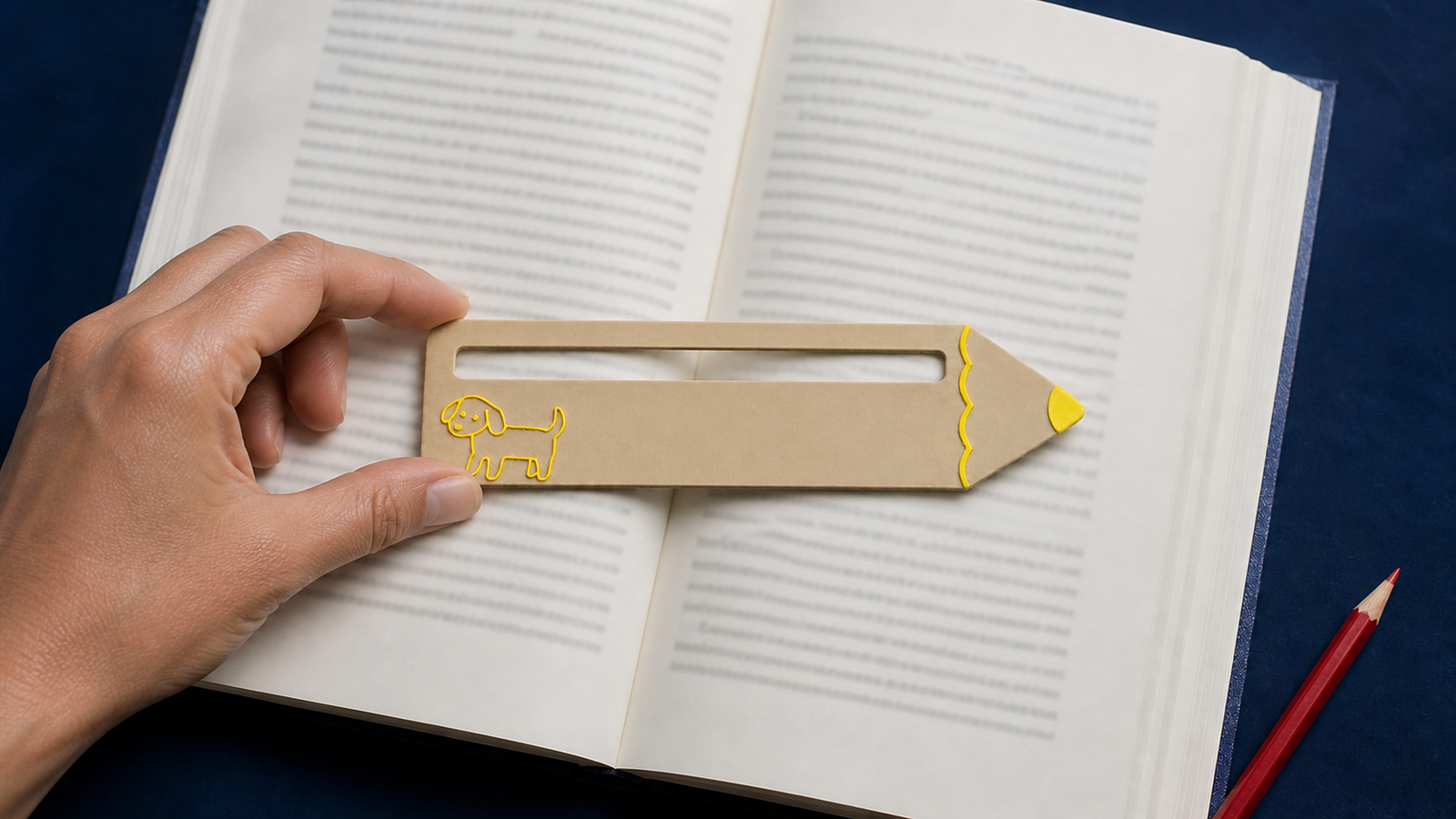
2. Is customization actually important?
3D printing becomes especially useful when size, fit, name, geometry, quantity, or iteration matters.
If a standard, inexpensive, durable object already exists and works perfectly, printing a weaker copy may not create value. But if the available object is the wrong size, no longer manufactured, needed only once, or must respond to a very specific context, additive manufacturing begins to make sense.
Customization should change usefulness—not merely change color and call itself innovation.
3. Will it replace, repair, or prevent something unnecessary?
One of the clearest arguments for printing an object is that a small part can keep a larger object in use. A replacement knob, clip, bracket, cover, adapter, or spacer can be far more meaningful than a table full of decorative experiments.
This does not make every 3D print automatically sustainable. Material choice, energy use, failed attempts, supports, durability, and end-of-life still matter. Waste-prevention guidance generally places reducing and reusing ahead of recycling, which is a useful reminder: the best object is not always the one made from a supposedly better material. Sometimes it is the object that avoids unnecessary production in the first place.
4. Is 3D printing the right process?
3D printing is brilliant for one-offs, small quantities, unusual geometry, rapid iteration, and objects that need to change from one user to another.
It is not automatically the best process for every simple object, especially when a reliable mass-produced version already exists at low cost. Printing can take hours. Parts have directional strength, surface, tolerance, and material limitations. A beautiful model on a screen is not proof that the printed object will work.
And some categories should never be treated casually. Medical, electrical, structural, food-contact, child-safety, and other safety-critical uses require appropriate materials, testing, standards, and qualified judgment. A downloadable file is not certification.
5. Will anyone still care after the novelty is gone?
Imagine the object one month after printing.
Is it being used? Has it solved the original problem? Would someone notice if it disappeared? Would you print it again, knowing what you know now?
If the honest answer is no, that does not make the print a failure. It may have been useful practice or enjoyable play. But it probably should not become inventory—and it may not deserve five more color variations.
For Business, Narrower Is Often Stronger
The hardest question for a 3D-printing business is rarely “What can we make?”
The answer is too large to be useful.
A better set of questions is:
- For whom are we making?
- What repeated problem do they have?
- Why are existing options inadequate?
- What does 3D printing allow us to change?
- What evidence would show that the solution is useful?
Basic market research begins with demand, customer characteristics, existing alternatives, market saturation, and pricing—not with an empty catalogue waiting to be filled.
If you are stuck between one hundred possible business ideas, try this instead:
- Choose one audience for the next 30 days—not forever.
- Collect ten real problems from that audience before browsing model libraries.
- Select one problem that is repeated, specific, and realistically addressable.
- Make the smallest prototype that can test your assumption.
- Put it in front of the intended user and observe what works, what fails, and what they actually value.
- Improve the idea before expanding the catalogue.
The other ideas are not lost. They are simply not in charge this month.
This is the part many new businesses resist because choosing one direction feels like rejecting all the others. But focus is not a permanent prison. It is a temporary boundary that allows you to learn something clearly.
A business that offers “anything you can imagine” sounds exciting. A business that understands one person’s problem and solves it well is easier to trust, explain, test, and improve.
A Simple Rule We Can Keep
At 3D Vinci, I think the mature question is not only:
Can we print it?
It is:
Why should this object exist?
That question does not kill creativity. It gives creativity direction.
Print the silly object when joy is the purpose. Print the calibration model when learning is the purpose. Print the prototype when uncertainty is the purpose. Print the product when a real person, a real problem, and a reason to choose it are visible.
Just do not confuse an endless list of possibilities with a plan.
Before your next print, complete one sentence:
This is for , who needs , because __.
If you cannot finish the sentence yet, you do not have to abandon the idea. Put it aside. Ask better questions. Return when its purpose is clearer.
The freedom of 3D printing is not that we can make everything.
It is that, with enough judgment, we can choose what is worth making.
Leave a Reply